Best Cordless Water Flosser in 2026 — Dentist Picks
I get questions about water flossers almost every day in my dental office. Folks want to know if cordless models actually do the job, which ones are worth the cash, and whether they can ditch the old-school string floss for good.
Here’s my honest take: a cordless water flosser is one of the most effective gadgets you can add to your daily routine. The best ones can knock out up to 99.9% of plaque bacteria from treated spots. For anyone with braces, implants, bridges, or just plain trouble with regular floss, these things are a game changer.
When you’re picking out a cordless flosser, check the size of the water tank, pressure settings, battery life, and what tips come in the box. A bigger tank means you won’t have to stop and refill halfway through. Multiple pressure levels are great—start gentle, then ramp up as your gums get healthier.
Battery type matters more than you’d think. Lithium-ion batteries usually outlast the old NiMH ones by a long shot. Got braces or other dental work? Look for models with special tips for those needs.
If you’re not sure which pressure or technique is right for you, don’t wing it—ask your dentist first.
I’ve put seven popular cordless models through their paces, looking at how well they work, how they’re built, how easy they are to use, and what my patients tell me about them. Here are the ones that actually stand out.
Dentist Top Picks (2026)
Best for shower use: Waterpik Cordless Pulse 3100
Best for braces & implants: Waterpik Cordless Pearl
Best budget pick: Bitvae C6 Water Flosser
Best water pressure range: AquaSonic Water Flosser
Best Quad Stream technology: Philips Sonicare Power Flosser 3000
Best battery life for travel: COSLUS C20 Water Flosser
Best feature-rich option: MySmile LP221 Water Flosser
Waterpik Cordless Pearl Water Flosser

If you’ve got braces, implants, or other dental work, the Waterpik Cordless Pearl is a real contender. It comes with four specialty tips and has ADA acceptance for safety and effectiveness.
Pros
- Orthodontic, plaque seeker, and classic jet tips included
- Runs quietly, which is nice if you share a bathroom
- ADA Accepted, so it’s been independently tested
Cons
- NiMH battery tends to lose steam after about two years
- Just two pressure settings—so not a ton of customization
- The 7-ounce reservoir empties in about 45 seconds
I like that Waterpik throws in both a plaque seeker tip and an orthodontic tip right in the box. Most people don’t realize you need different tips for different dental situations.
The plaque seeker is super helpful around crowns and implants, where bacteria love to hide. The quieter motor stands out compared to other models. That 360-degree tip rotation really helps you reach those back molars—honestly, that’s where most folks miss.
But the small reservoir means you’ll almost definitely need a refill per session. The NiMH battery tech feels a bit outdated, and I’ve heard from patients and seen in reviews that it loses charge holding power after a couple of years.
Waterpik Cordless Pulse 3100
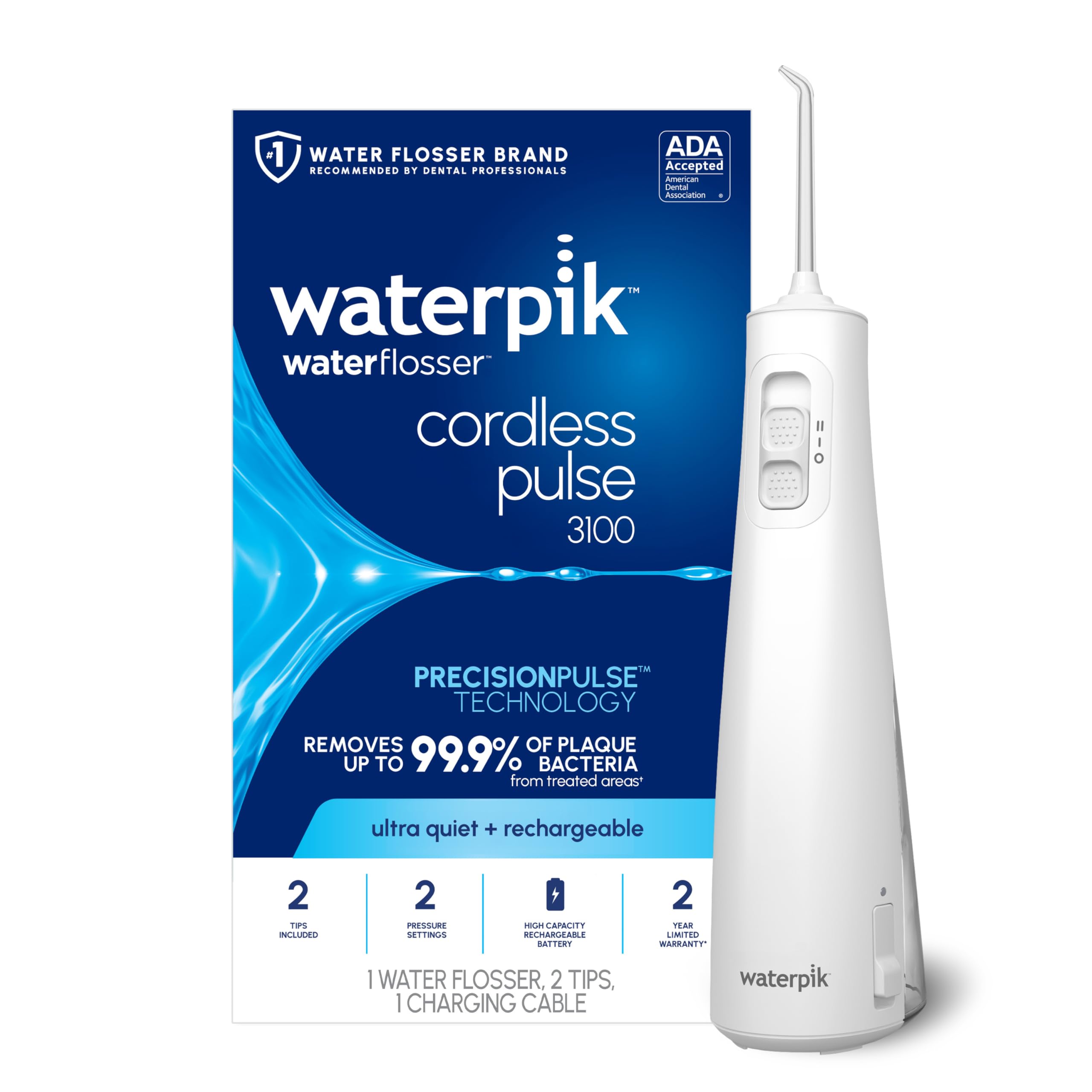
The Cordless Pulse 3100 is my top pick for anyone who wants to floss in the shower. It’s waterproof and the lithium-ion battery can last up to nine weeks on a charge.
Pros
- Totally waterproof—use it in the shower, no mess
- Lithium-ion battery with a recharge indicator goes for weeks
- ADA Accepted and a best-seller in its category
Cons
- Only comes with two tips, so extras might be needed
- Six-ounce reservoir is even smaller than the Pearl
- Some users mention leaks after a while
I suggest this one to patients who complain that flossing is messy. Using it in the shower? Problem solved. The lithium-ion battery is a big step up from the Pearl’s NiMH, so you get way more reliable power.
USB-C charging is a modern touch I appreciate. It’s also compact enough to toss in a travel bag. Downsides? The reservoir is small, and you don’t get many tip options in the box.
If you have special dental needs, you’ll have to buy extra tips. The tongue cleaner tip is a nice touch if you care about fresh breath.
AquaSonic Water Flosser
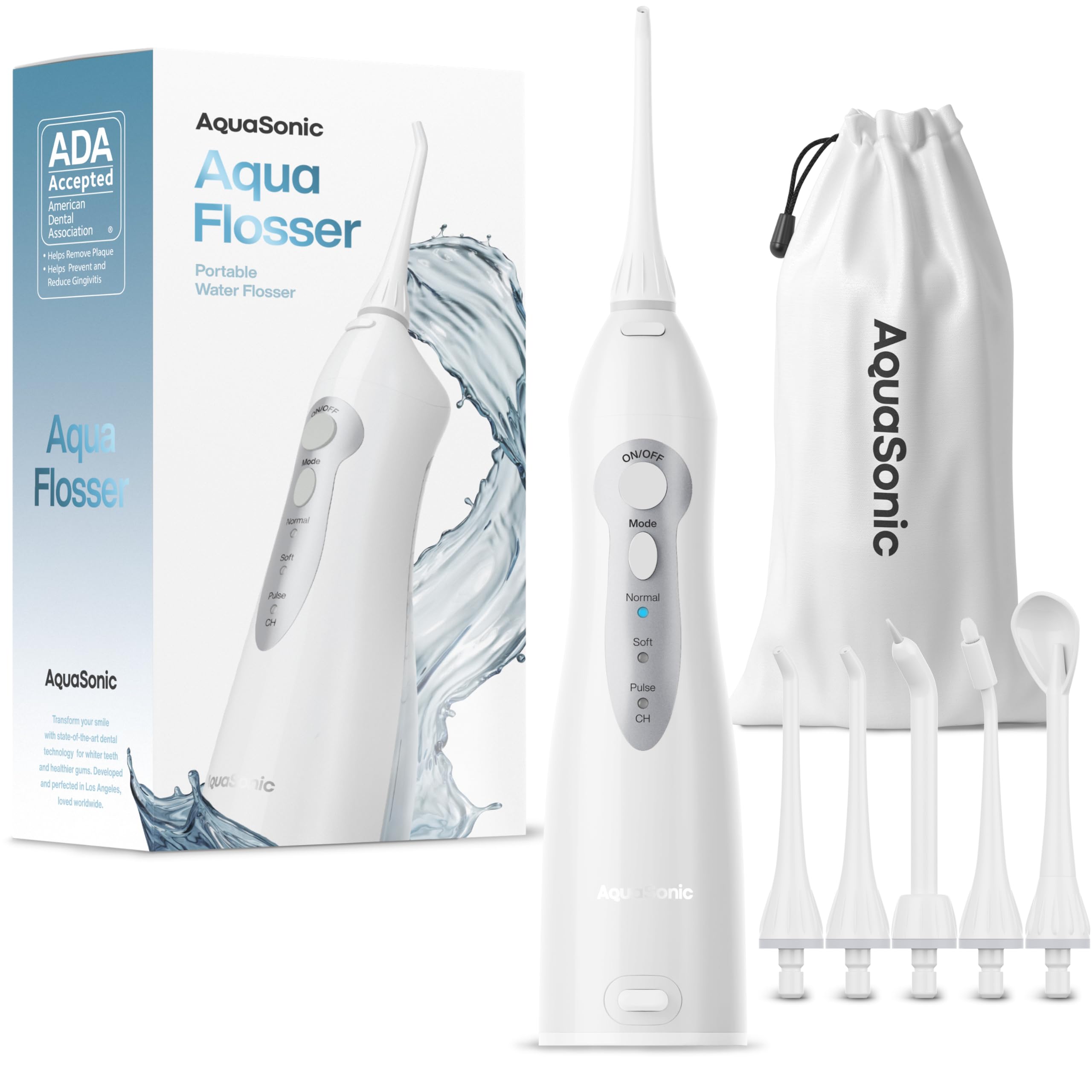
The AquaSonic packs a punch with strong water pressure across three modes. It’s a powerhouse for deep cleaning, but if you’re new to flossers, start on the lowest setting—trust me, your gums will thank you.
Pros
- Five interchangeable jet tips, including orthodontic and periodontal
- Fully waterproof, comes with a travel bag
- Pressure strong enough to rival some countertop units
Cons
- Even “soft” mode can feel intense if you’ve got sensitive gums
- No ADA acceptance seal
- Some users complain about battery inconsistency
Stronger water pressure isn’t always better. I’ve seen patients bruise their gums by cranking it up too soon. The AquaSonic’s soft mode is already strong, so if your gums are inflamed or sensitive, take it slow.
The five-tip set covers most needs, and the 360-degree rotating nozzle helps you get to those tricky back teeth. The travel bag is actually handy. Battery life is solid—several weeks per charge.
No ADA seal here. That doesn’t mean it’s unsafe, but it hasn’t been independently tested like some others.
Philips Sonicare Cordless Power Flosser 3000
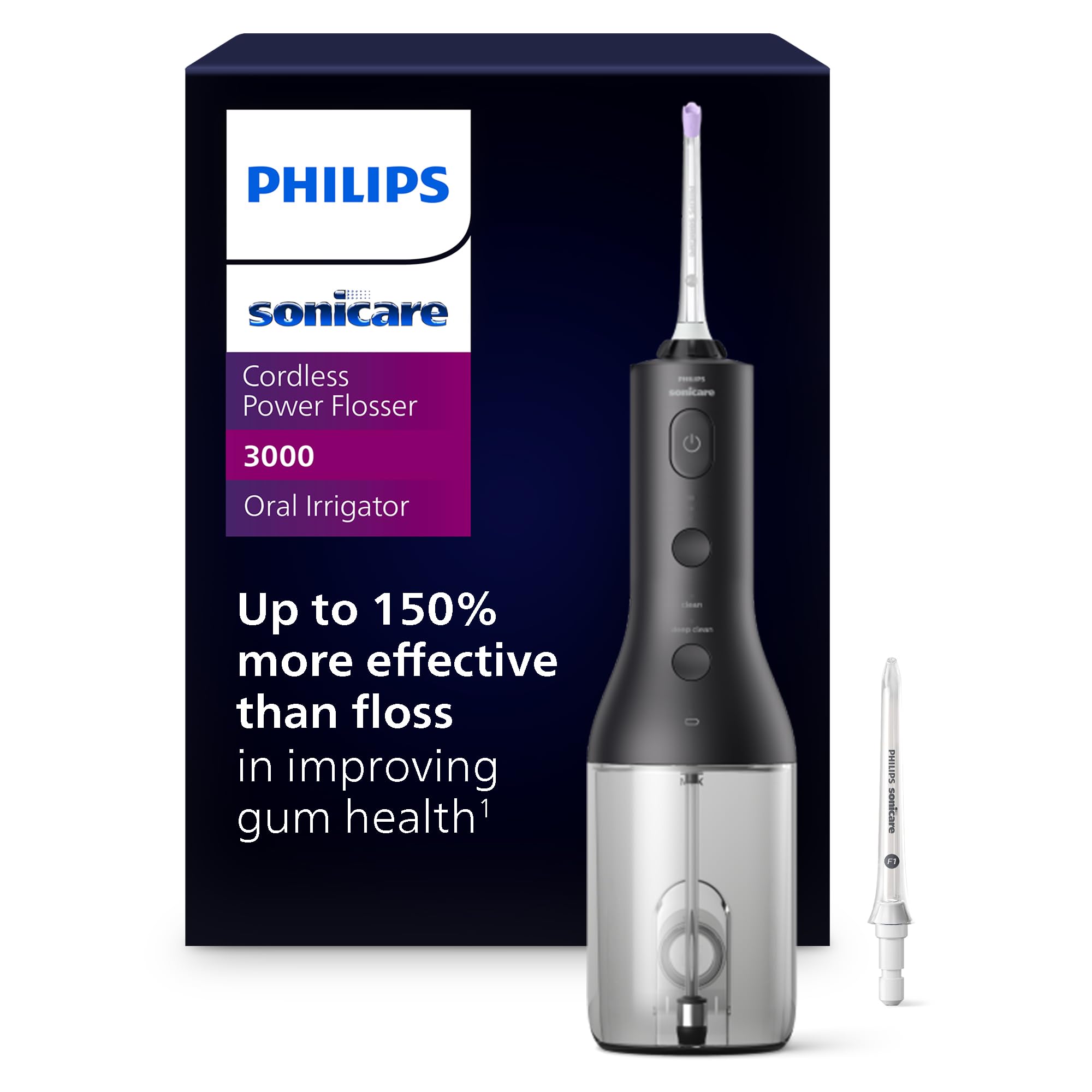
The Philips Sonicare Power Flosser 3000 stands out with its Quad Stream nozzle. It splits the water into four jets, so you cover more area between teeth than with a single stream.
Pros
- Quad Stream tech covers up to nine times more surface than single-stream
- Eight-ounce reservoir lasts a full 60-second session with no refill
- Deep Clean mode with Pulse Wave technology prompts you to move tooth by tooth
Cons
- Heavier than most cordless models—almost 15 ounces
- Costs more than similar options
- Some folks report it doesn’t last more than a few months
That Quad Stream nozzle is actually pretty clever. In my experience, patients who struggle with aim or technique do better with a wider spray—it’s more forgiving.
The big reservoir is a plus. You won’t have to stop mid-session to refill. Deep Clean mode pauses every 15 seconds to nudge you to the next quadrant, which is exactly what I try to teach in the chair.
Downside? It’s bulky and takes up more space. It’s also pricier, and a few reviews mention it quit working after a few months. The included wall adapter is a nice extra, though.
COSLUS C20 Water Flosser

The COSLUS C20 is a solid value, with ADA acceptance, a big 300-milliliter tank, and a battery that can last a month—perfect for travel.
Pros
- ADA Accepted—so it’s been independently tested
- 300-milliliter tank means no mid-session refills
- Battery goes up to 30 days per charge
Cons
- Even soft mode can feel strong if you’re new to water flossers
- Doesn’t feel as premium as the big-name brands
- One-year warranty (Waterpik gives two)
This thing is super popular on Amazon, and after trying it, I get the hype. The big reservoir is a real perk. Most cordless options force you to stop and refill, which interrupts your flow and sometimes leads to skipping spots.
The dual-thread water pulse tech cleans well. I always tell patients to adjust the pressure to what feels comfortable—this model lets you do that. ADA acceptance gives me extra confidence when I recommend it.
The one-year warranty is shorter than Waterpik’s, so if you want something that’ll last longer, keep that in mind.
Bitvae C6 Water Flosser
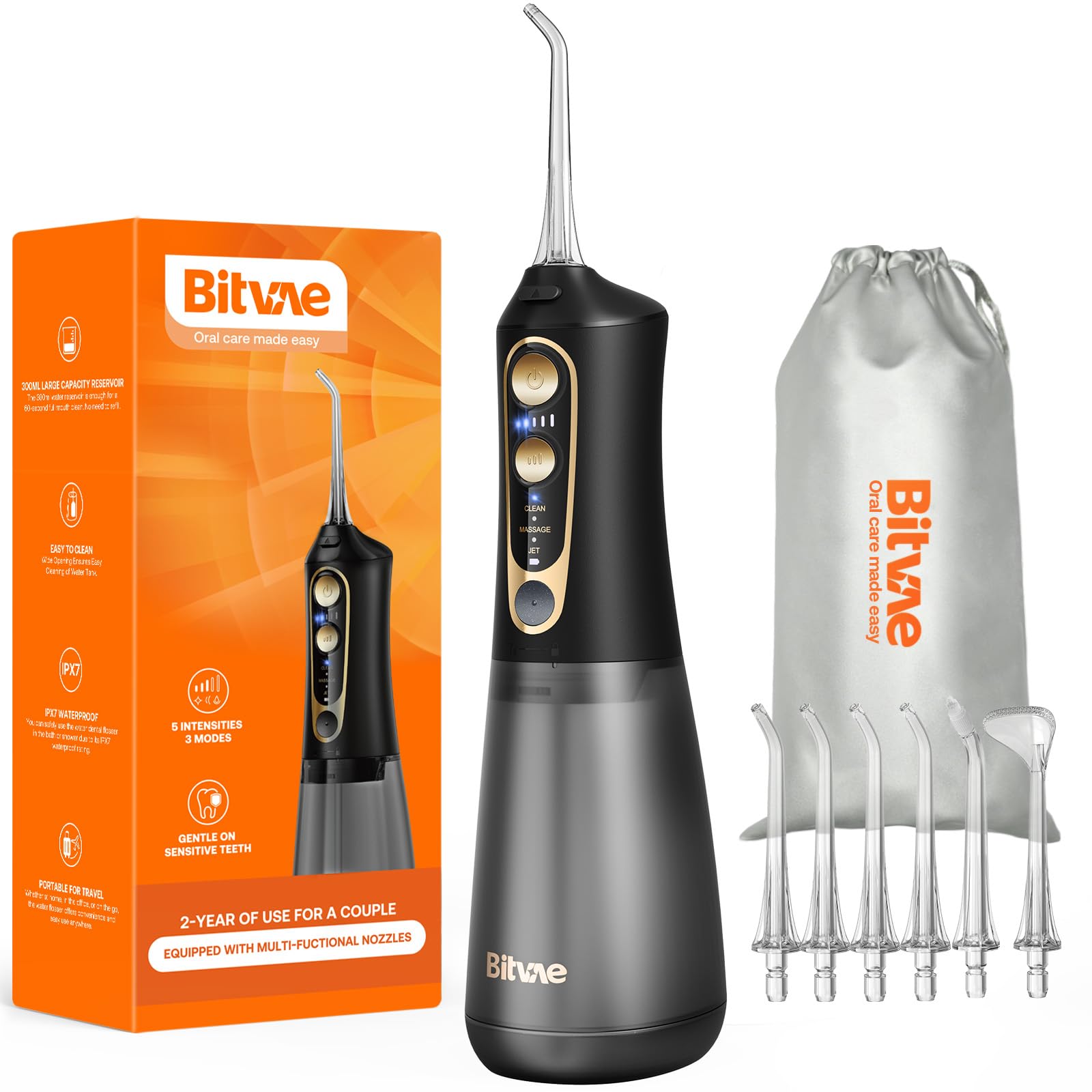
The Bitvae C6 comes with 15 cleaning combinations and six jet tips. It’s a solid budget pick for anyone just starting out with water flossing.
Pros
- Three modes and five intensity levels—15 total cleaning combos
- Six included tips handle orthodontic, periodontal, and tongue cleaning
- Battery lasts up to 40 days, which is the longest here
Cons
- No ADA seal
- Lowest pressure setting might still feel strong for newbies
- Reservoir may need a refill for a true full-mouth clean
Honestly, the pressure range on this model (20 to 130 PSI) surprised me for the price. At 20 PSI, the gentlest setting works well for people recovering from gum surgery or dealing with inflamed gums.
It’s not common to see six tips included at this price. The orthodontic tip is a must for braces, and the tongue cleaner does help with breath—though I wish more people actually used it. Forty days of battery life is a dream if you travel or just forget to charge things. The 300-milliliter tank is decent, but if you’re thorough, you’ll probably need to refill once. For the price, this flosser honestly over-delivers.
MySmile LP221 Water Flosser

The MySmile LP221 stands out with a built-in UVC sanitizer and an OLED display. It’s the most feature-packed cordless flosser I’ve seen in this price range.
Pros
- UVC light sanitizes the tank and tips between uses
- OLED display shows battery, mode, pressure, and water temperature
- 335-milliliter tank is the largest here
Cons
- Higher price than similar models
- Some users say the UV light stops working after a few months
- Only a one-year warranty
I’m a fan of the UVC sanitizer. Water reservoirs can get gross if you leave them damp in a bathroom, so a 120-second sanitizing cycle is actually useful, not just a gimmick.
The OLED screen is nice for checking water temperature, which matters if you have sensitive teeth or gums—cold water can be a shock. The 335-milliliter tank lets you finish a session without stopping. Pressure runs from 40 to 150 PSI, with four modes and three intensity levels, so you get ten custom combos. It’s IPX7 waterproof, so shower flossing is fair game.
That said, I wish the warranty was longer. A few patients have told me their UV light quit after a few months, and that’s a bummer. If you love bells and whistles, though, this is a strong contender.
Buying Guide
How to Choose the Right Cordless Water Flosser
Choosing a cordless water flosser doesn’t have to be a headache. Focus on features that actually make a difference in your daily routine and your oral health.
Reservoir Size
Reservoir size affects how long you can floss before you need a refill. Most people need about 60 seconds for a full-mouth clean.
Smaller tanks (6 to 7 ounces) usually run out at around 45 seconds, so you’ll probably need a mid-session refill. Larger tanks (10 to 11 ounces) let you finish in one go.
| Reservoir Size | Approximate Floss Time | Refill Needed? |
|---|---|---|
| 6-7 oz (175-210 mL) | ~45 seconds | Usually yes |
| 10 oz (300 mL) | ~60 seconds | Rarely |
| 11+ oz (335 mL) | 60+ seconds | No |
Pressure Settings and Modes
Look for at least two pressure levels. If you’re just starting or your gums are sensitive, begin on the lowest setting and work up slowly.
A wider PSI range gives you more control, and pulse modes can help massage your gums and boost circulation.
Battery Type and Life
Lithium-ion batteries hold a charge longer and last more cycles than NiMH. Most models go two to four weeks on a charge, but some stretch to 40 days.
If you travel a lot, pick something with a longer battery life and USB charging. It’s just more convenient.
Tips and Accessories
Different mouths need different tips. Here’s a quick rundown:
- Classic jet tip: daily cleaning for most folks
- Orthodontic tip: must-have for braces
- Plaque seeker tip: great for crowns, implants, bridges
- Periodontal tip: gets water below the gumline—helpful if you have gum disease
- Tongue cleaner tip: for fresher breath (if you remember to use it)
Waterproof Rating
IPX7 means you can submerge the flosser briefly, so shower use is fine. If you hate splashing water around your sink, double-check for this rating before you buy.
ADA Acceptance
The ADA Seal of Acceptance tells you the product passed independent safety and effectiveness tests. It’s not a dealbreaker if a flosser doesn’t have it, but I do see it as a plus when recommending options.
When to Talk to Your Dentist
If you’re dealing with active periodontal disease, you really should check in with your dentist before using a water flosser. The same goes for folks who’ve just had oral surgery or have dental implants—don’t just guess at the right pressure or tip.
Honestly, a water flosser can be a great addition to your routine, but it’s not a magic fix. You still need to brush well and keep up with your regular dental visits.