Sonicare 2100 vs 4100 (2026): Which Should You Buy?


Choose the Philips Sonicare 2100 if you already brush gently and it costs less. Choose the Sonicare 4100 if you tend to press too hard and want a pressure sensor to alert you.
The right choice depends on how you brush, your gum sensitivity, and the current price difference. Prices vary by retailer and promotion.
I’ve tested both. Here’s my honest verdict.
As an experienced dentist with years of experience, I’ve tested and evaluated 300+ dental products. So, let’s take a closer look from a dentist’s perspective.
Recommended Reading: Philips Sonicare Buying Guide | The Ultimate Guide
Quick verdict: Choose the Sonicare 2100 if you want a straightforward electric toothbrush and already use gentle pressure. Choose the Sonicare 4100 if you tend to scrub too hard, have gum recession, or want pressure feedback. Both require good technique and daily flossing or interdental cleaning.
Top 10 Rankings
- Philips Sonicare 9900 | 10/10 $$$$
- Philips Sonicare 9500 | 9.9/10 $$$
- Philips Sonicare 9750 | 9.9/10 $$$$
- Philips Sonicare 9300 | 9.8/10 $$$
- BURST Pro Sonic | 9.7/10 $
- Philips Sonicare 9000 | 9.7/10 $$$
- Philips Sonicare 7500 | 9.6/10 $$
- BURST Original Sonic | 9.5/10 $
- Philips Sonicare 6100 | 9.5/10 $$
- Philips Sonicare 6500 | 9.5/10 $$
My Verdict
Buy the Sonicare 2100.
For most people who already brush gently, the 2100 offers the core Sonicare brushing experience for less money. The 4100 adds a pressure sensor that can help people recognize excessive brushing force. Compare current prices rather than assuming a fixed price gap.
The one exception: if you know you brush too hard or have sensitive gums, the 4100’s pressure sensor is a genuinely useful feature and worth the upgrade.
|
2 Brushing Modes
|
5X Plaque Removal

|
|
Primary Rating:
4.6
|
Primary Rating:
4.5
|
|
|
|
|
Pros:
|
Pros:
|
|
Cons:
|
Cons:
|
- Advanced Sonic Technology
- 14-Day Battery Life
- 2 Brushing Modes
- Smartimer & Quadpacer
- Lacks Travel Case
- Lacks Multiple Brush Heads
- Advanced Sonic Technology
- 14-Day Battery Life
- 2 Brushing Modes
- C2 Plaque-Control Brush Head
- Smartimer & Quadpacer
- Lacks Travel Case
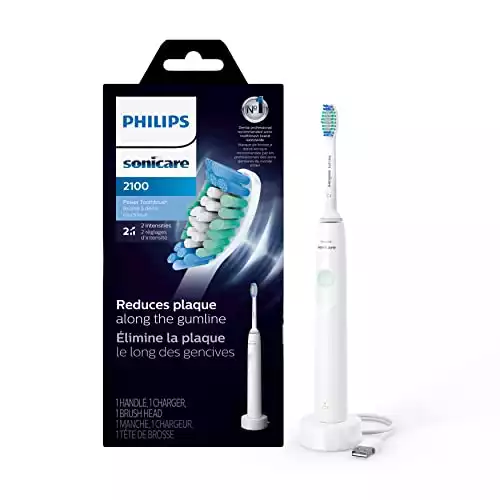
Dentist Review | Sonicare 2100 Toothbrush
BUY -> Sonicare 2100 Toothbrush
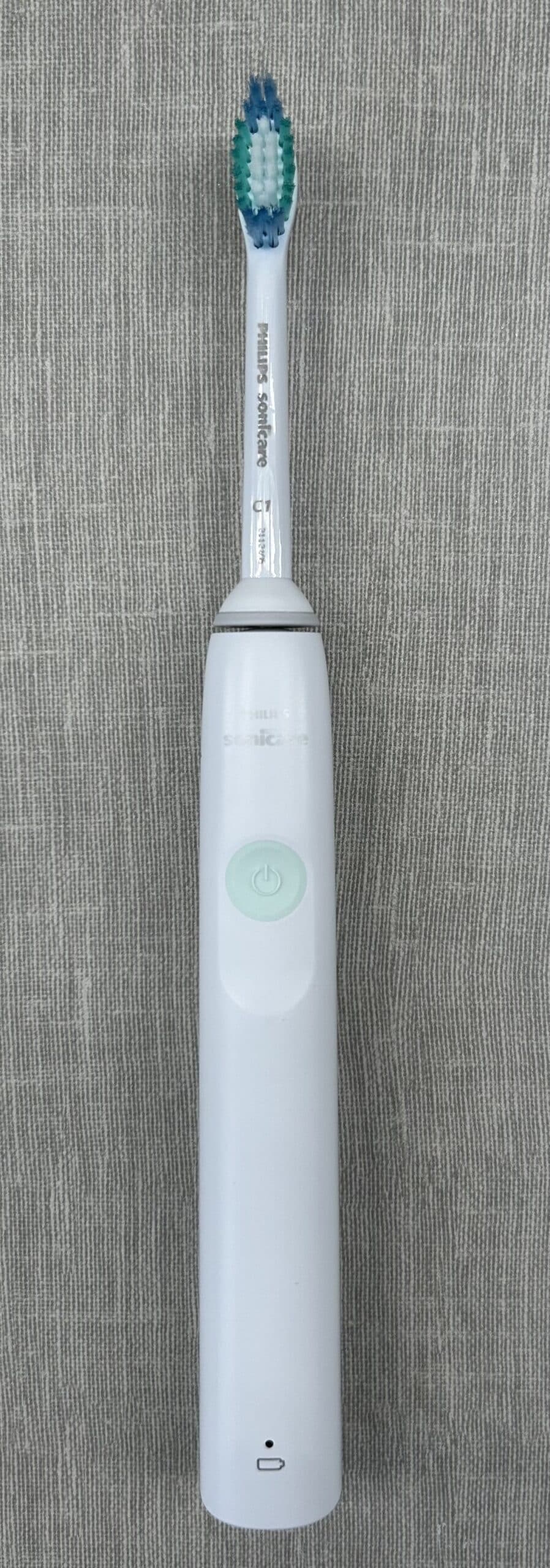
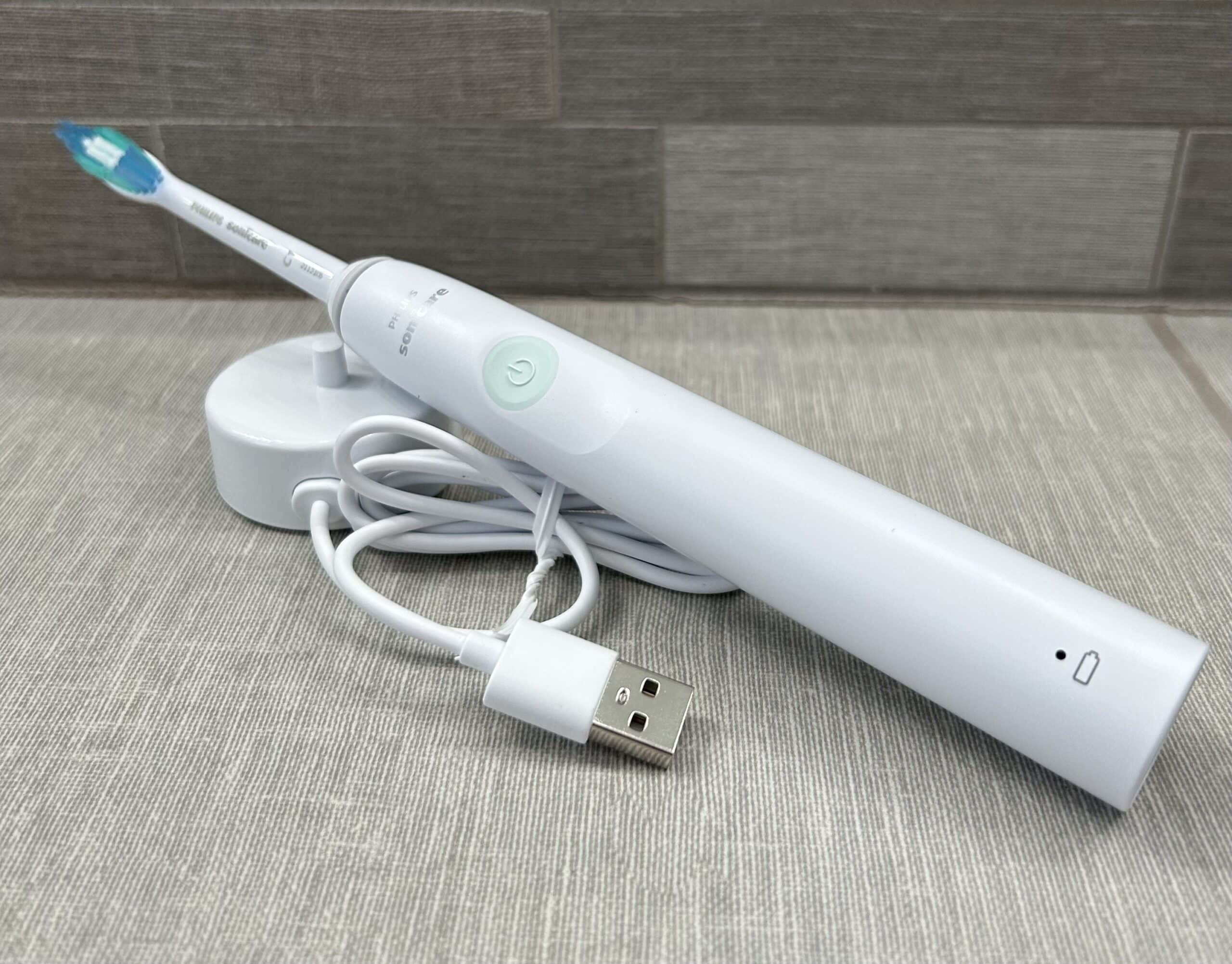
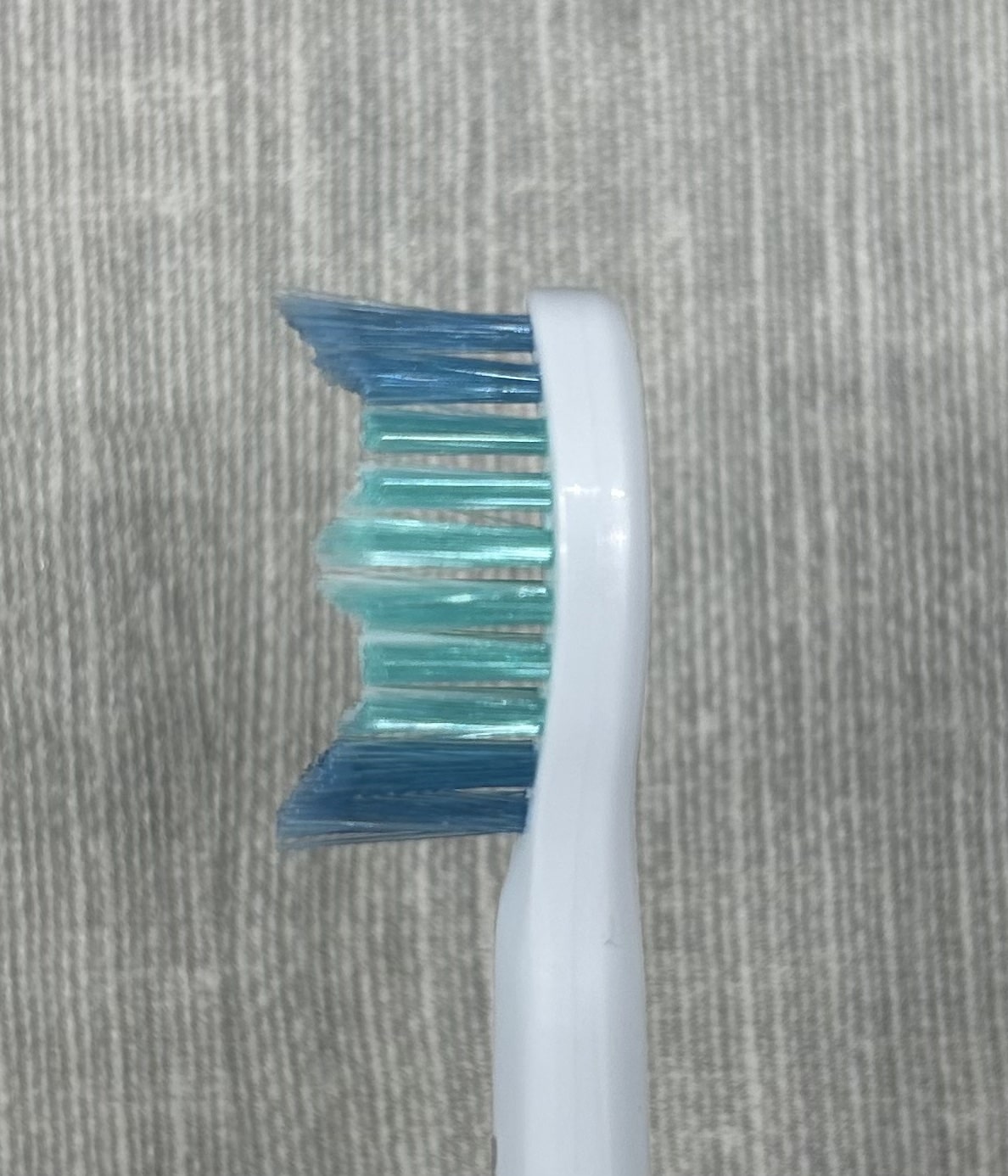

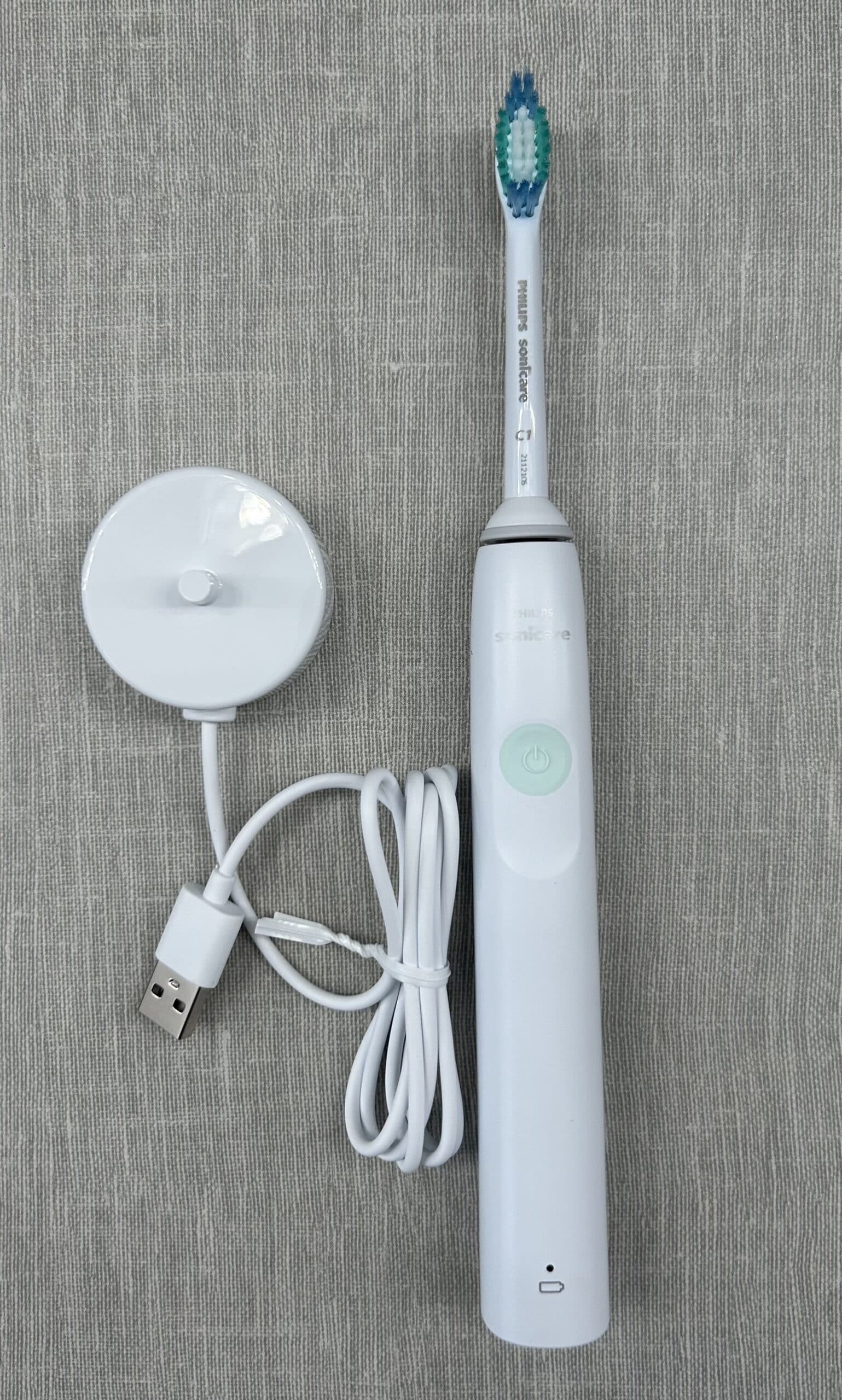
The 2100 is about as straightforward as electric toothbrushes get, and that’s exactly why I like recommending it to patients who are switching from a manual brush for the first time.
One button. Two intensity modes. A 14-day battery. A 2-minute timer with 30-second interval reminders. Everything you need, nothing you don’t.
The sonic technology drives fluid between teeth and along the gumline, removing plaque far more effectively than a manual brush. I recommend this to patients who want a reliable daily driver without paying a premium for features they won’t use.
What I liked:
- Slim, lightweight handle is easy to hold
- Easy-Start gradually increases intensity over the first 14 uses — great for first-time electric toothbrush users
- W-shaped brush head with variable-length bristles reaches back teeth well
- ADA Seal of Acceptance
What I didn’t like:
- Handle is slightly slippery — no rubberized grip
- No pressure sensor, so aggressive brushers won’t get feedback
- Only comes with one brush head
Best for: First-time electric toothbrush users, budget-conscious shoppers, anyone who wants simple and effective without the extras.
Recommended Reading: Philips Sonicare 2100 Electric Toothbrush Review 2026
Dentist Review | Sonicare 4100 Toothbrush
BUY -> Sonicare 4100 Toothbrush


The 4100 steps up from the 2100 in two meaningful ways: a pressure sensor and the C2 Plaque Control brush head.
The pressure sensor is the real differentiator. It vibrates to alert you when you’re pushing too hard against your teeth and gums. For my patients with gum recession or sensitivity, this is a clinically useful feature — overbrushing is one of the most common causes of gum damage I see in the chair.
The C2 brush head has a slightly denser bristle pattern than the C1 that comes with the 2100, which provides marginally better plaque removal. In practice, the difference is minor, and any Sonicare-compatible brush head can be used on either model anyway.
What I liked:
- Pressure sensor protects gums from overbrushing
- C2 brush head is a solid upgrade from the basic C1
- Same reliable sonic technology and battery life as the 2100
- Comes in more color options
What I didn’t like:
- $20 more for features most people won’t notice day-to-day
- Still no travel case
Best for: Patients with sensitive gums, anyone who tends to brush aggressively, people who want a small upgrade in protection without going to a mid-range model.
Recommended Reading: Philips Sonicare 4100 Electric Toothbrush Review 2026
What They Share
Both models deliver the same core Sonicare experience:
Sonic Technology drives up to 31,000 brush strokes per minute, pushing fluid between teeth and along the gumline. Both remove significantly more plaque than a manual toothbrush.
14-Day Battery Life means you charge once every two weeks. Both have a battery indicator light.
Smartimer & Quadpacer runs a 2-minute brushing session with a 30-second vibration reminder so you spend equal time in all four quadrants of your mouth.
Easy-Start Technology gradually ramps up the power over the first 14 brushing sessions, which makes the transition from manual brushing much more comfortable.
ADA Seal of Acceptance on both models means they’ve been independently verified for safety and effectiveness.
Which Should You Buy?
Choose the 2100 if:
- You’re switching from a manual toothbrush for the first time
- You brush with a light to moderate hand
- Budget matters and you want maximum value
Choose the 4100 if:
- You know you brush too hard or have been told so by your dentist
- You have sensitive or receding gums
- The $20 difference is not a concern
Both are excellent toothbrushes. If you’re on the fence, save the $20 and put it toward replacement brush heads.
Recommended Reading: Best Sonicare Replacement Brush Heads (Ultimate Guide)
Looking to Spend More?
If you want additional features like multiple cleaning modes, UV sanitizers, or app connectivity, here’s where both models rank in my full electric toothbrush rankings:
- Sonicare 2100 — #19 overall (9.1/10)
- Sonicare 4100 — #22 overall (9.0/10)
For the next step up, I’d look at the Sonicare 4100 vs 5100 comparison — the 5100 adds three cleaning modes and is frequently on sale for around $50.
Frequently Asked Questions
Is the Sonicare 2100 good enough for daily use? Yes. It uses the same core sonic technology as Philips’ premium models. For daily brushing, the 2100 cleans your teeth just as effectively as a $200 Sonicare.
Can I use the same brush heads on both models? Yes. Both models accept standard Sonicare brush heads, so you can swap in any compatible replacement head regardless of which model you own.
How long do the brush heads last? Philips recommends replacing every 3 months. The 4100 includes a brush head replacement reminder that changes color when it’s time.
Does the pressure sensor on the 4100 really matter? For most people, no. But if your dentist has mentioned gum recession or overbrushing, it’s a genuinely useful feature that can protect your gums over time.
Which is better for kids? Neither — Philips makes a dedicated kids’ Sonicare with smaller brush heads and softer bristles designed for younger mouths. I’d recommend that instead.
Are both models covered by a warranty? Yes, both come with a 2-year limited warranty from Philips.
Final Recommendation
BUY -> Sonicare 2100 Toothbrush
The Sonicare 2100 wins on value. If you’re looking for a reliable, dentist-recommended electric toothbrush that won’t break the bank, it’s the one I’d tell patients to buy. The 4100 is a worthy upgrade for those who brush too aggressively — but for everyone else, save the money.
Sonicare 2100 vs 4100: Key Differences
Pressure sensor: The 4100 offers pressure feedback; this is the most useful upgrade for someone who brushes aggressively. The 2100 does not offer the same pressure warning.
Cleaning: Both use Sonicare sonic brushing technology. More features do not automatically mean better plaque removal when brushing technique and duration are the same.
Value: The 2100 is the simpler choice. Check the specific model number, included brush head, retailer bundle, and current price before deciding.
Sonicare 2100 vs 4100 FAQs
Is the Sonicare 4100 worth the extra money?
It can be, especially if you brush too hard or want pressure feedback. If you already brush gently, the 2100 may offer better value.
Do the Sonicare 2100 and 4100 clean differently?
Both use sonic brushing technology. Technique, brushing for two minutes, and replacing worn brush heads matter more than small feature differences.
Which Sonicare is better for receding gums?
The 4100’s pressure sensor may help you avoid brushing too hard. Recession can have several causes, so persistent or worsening recession deserves a dental assessment.
Can I use the same replacement brush heads?
Many Philips Sonicare click-on brush heads fit both models, but check the exact handle and brush-head compatibility before purchasing.
Does either toothbrush replace flossing?
No. Clean between your teeth daily using floss or an interdental brush suited to your spaces.
Should I buy the 2100 or 4100 for a first electric toothbrush?
Start with the 2100 for a simple, budget-focused option. Consider the 4100 if pressure feedback would improve your technique.
Unsure About a Dental Treatment Recommendation?
A toothbrush supports home care, but it cannot diagnose gum disease or determine whether treatment is necessary. My Dental Advocate provides free independent dental second opinions to help patients understand their options.
Electric Toothbrush Overall Rankings
- Philips Sonicare 9900 | 10/10
- Philips Sonicare 9500 | 9.9/10
- Philips Sonicare 9750 | 9.9/10
- Philips Sonicare 9300 | 9.8/10
- BURST Pro Sonic | 9.7/10
- Philips Sonicare 9000 | 9.7/10
- Philips Sonicare 7500 | 9.6/10
- BURST Original Sonic | 9.5/10
- Philips Sonicare 6100 | 9.5/10
- Philips Sonicare 6500 | 9.5/10
- BURST Curve Sonic | 9.4/10 $
- 7am2m Electric | 9.4/10
- Philips Sonicare 5300 | 9.4/10
- AquaSonic Black | 9.3/10
- AquaSonic Vibe | 9.3/10
- Philips Sonicare 5100 | 9.3/10
- SNOW LED Electric | 9.2/10
- Brio (Ollie) SmartClean | 9.1/10
- Philips Sonicare 2100 | 9.1/10
- Bitvae Smart S3 | 9.1/10
- Philips Sonicare 1100 | 9.1/10
- Philips Sonicare 4100 | 9.0/10
- Bitvae S2 Ultrasonic | 8.9/10
- Bitvae D2 Electric | 8.8/10
- Oral-B 1500 Electric | 8.8/10
- Oral-B Pro 1000 | 8.7/10
- Bitvae R2 Rotating | 8.5/10
- Quip Electric | 8.5/10
- Colgate Hum Electric | 7.5/10
Need a second opinion? We can help! Learn more. Knowledge is power when cultivating healthy dental habits. The more informed you are, the better positioned you’ll be to prevent avoidable and potentially costly dental procedures for you and your family. Watch for future blog posts, where we’ll continue sharing important information, product reviews and practical advice!