Sonicare 1100 vs 2100: Dentist Picks Winner (2026)
Dentist Tested and Reviewed

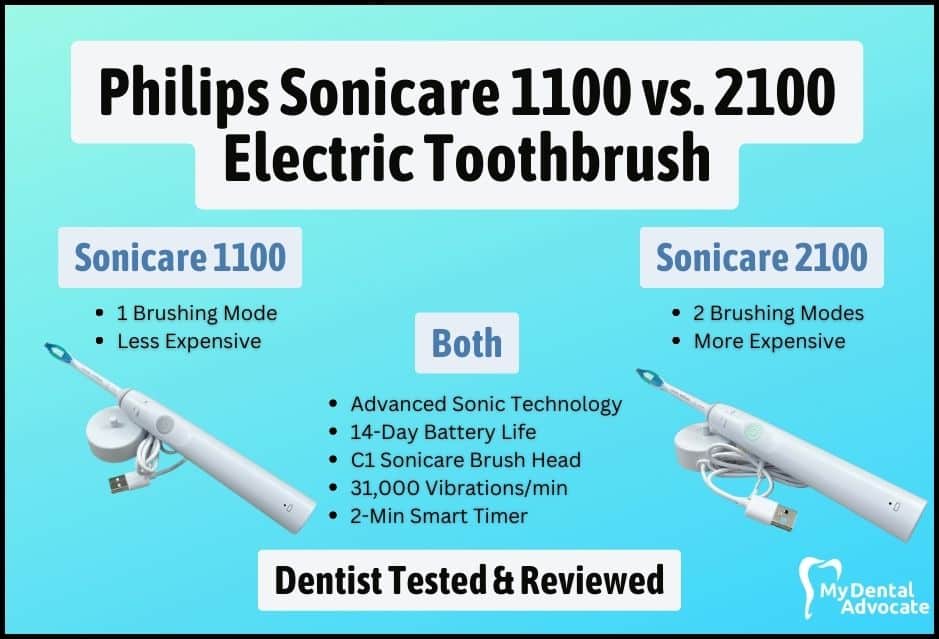
Here’s the truth most reviews won’t tell you: these two brushes are nearly identical. One feature separates them — and whether that feature matters depends on your mouth.
As an experienced dentist with years of experience, I’ve tested and evaluated 300+ dental products. So, after using both for two weeks, let’s take a closer look from a dentist’s perspective.
Recommended Reading: Philips Sonicare Buying Guide | The Ultimate Guide
Top 10 Rankings
- Philips Sonicare 9900 | 10/10 $$$$
- Philips Sonicare 9500 | 9.9/10 $$$
- Philips Sonicare 9750 | 9.9/10 $$$$
- Philips Sonicare 9300 | 9.8/10 $$$
- BURST Pro Sonic | 9.7/10 $
- Philips Sonicare 9000 | 9.7/10 $$$
- Philips Sonicare 7500 | 9.6/10 $$
- BURST Original Sonic | 9.5/10 $
- Philips Sonicare 6100 | 9.5/10 $$
- Philips Sonicare 6500 | 9.5/10 $$
|
Advanced Sonic Technology
|
Multiple Brushing Modes
|
|
Primary Rating:
4.4
|
Primary Rating:
4.6
|
|
$32.00
|
$34.96
|
|
Pros:
|
Pros:
|
|
Cons:
|
Cons:
|
- Advanced Sonic Technology
- EasyStart Technology
- 2-Minute Timer
- QuadPacer
- 14-Day Battery Life
- Limited Brushing Modes
- No Travel Case
- Larger Handle
- Multiple Brushing Modes
- 2-Minute SmartTimer
- Slim Ergonomic Design
- EasyStart Technology
- 14-Day Battery Life
- No Travel Case
- Limited Features
Dentist Review | Sonicare 1100 Toothbrush
BUY -> Sonicare 1100 Toothbrush
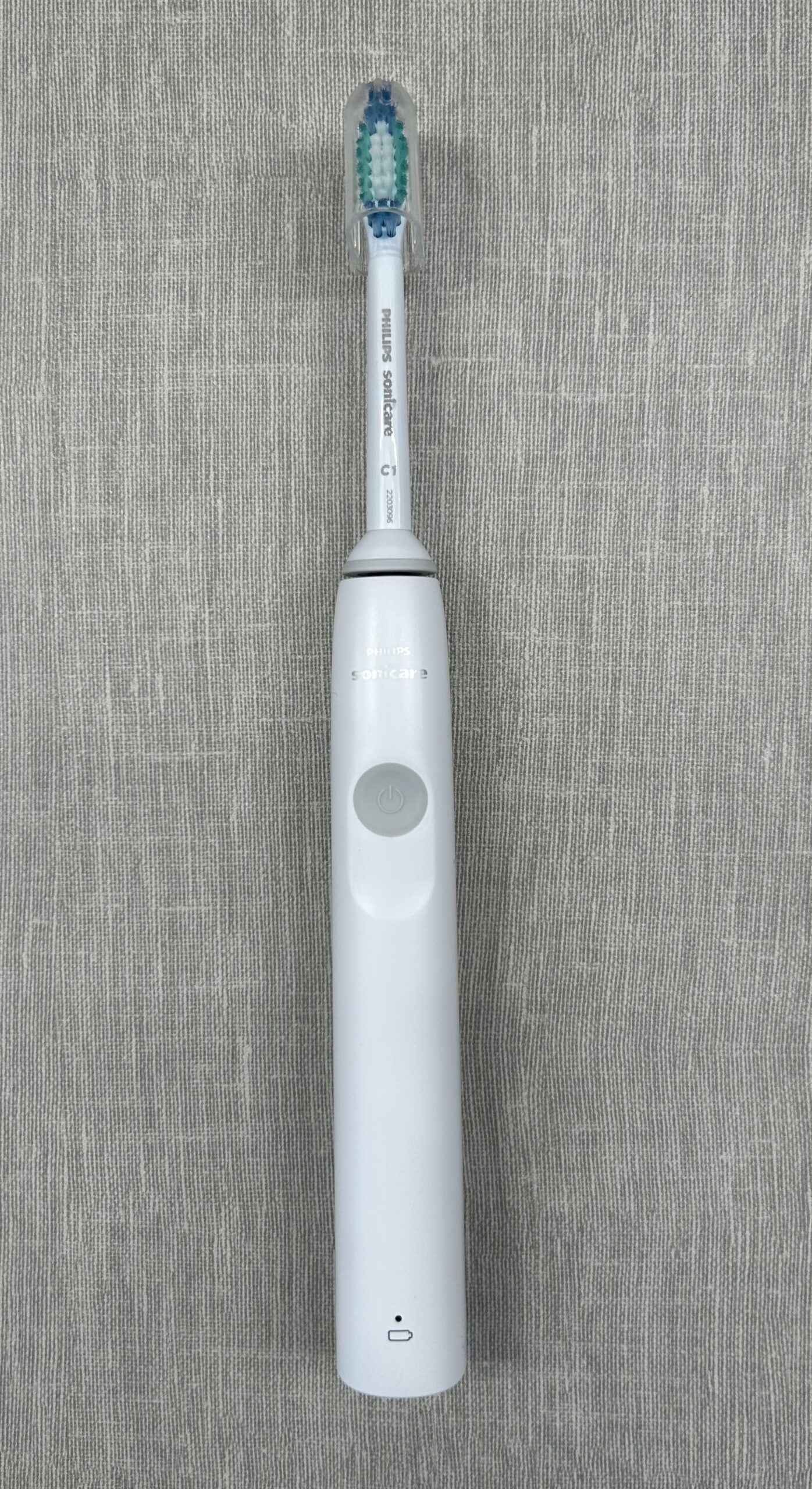
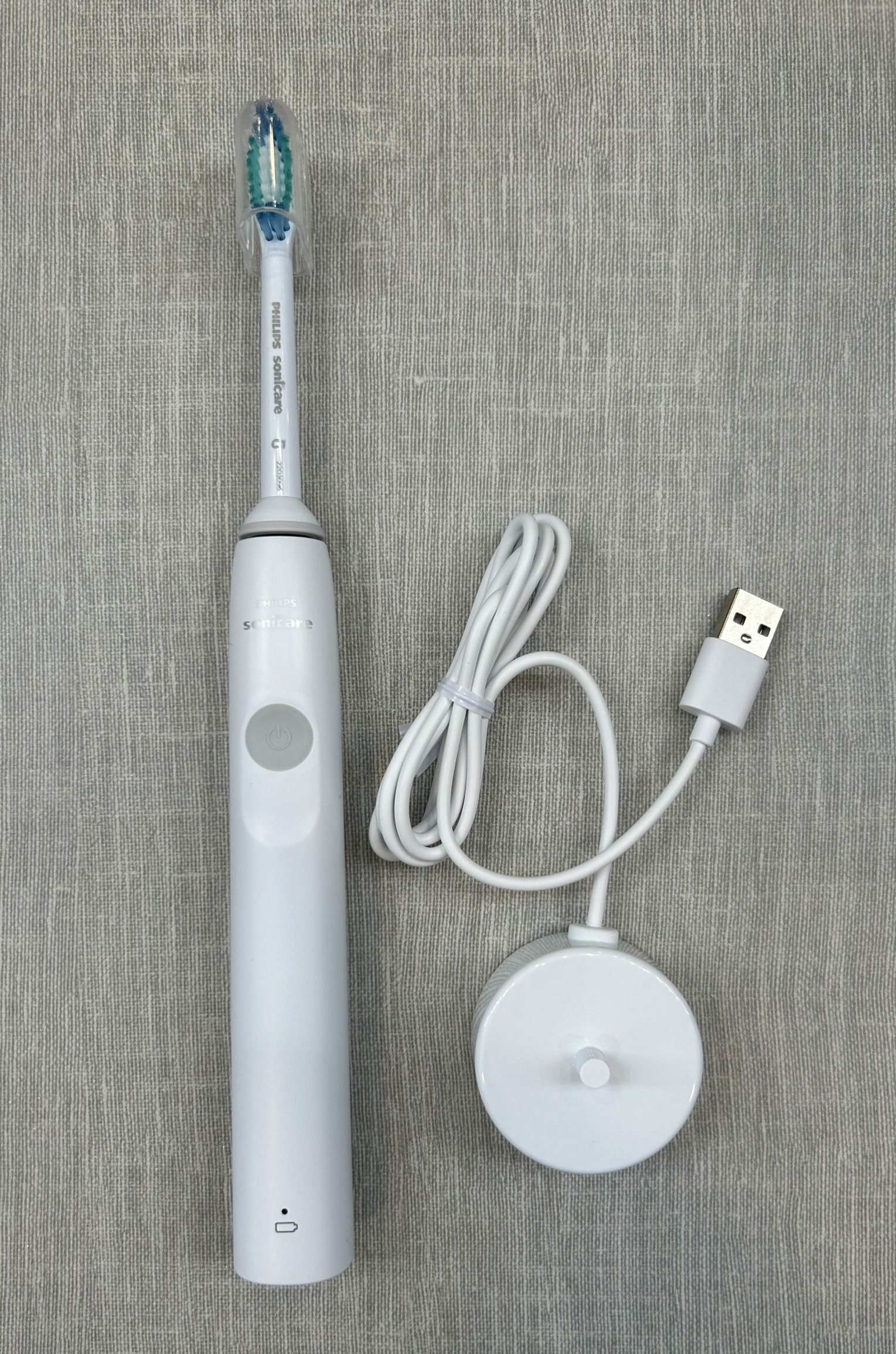
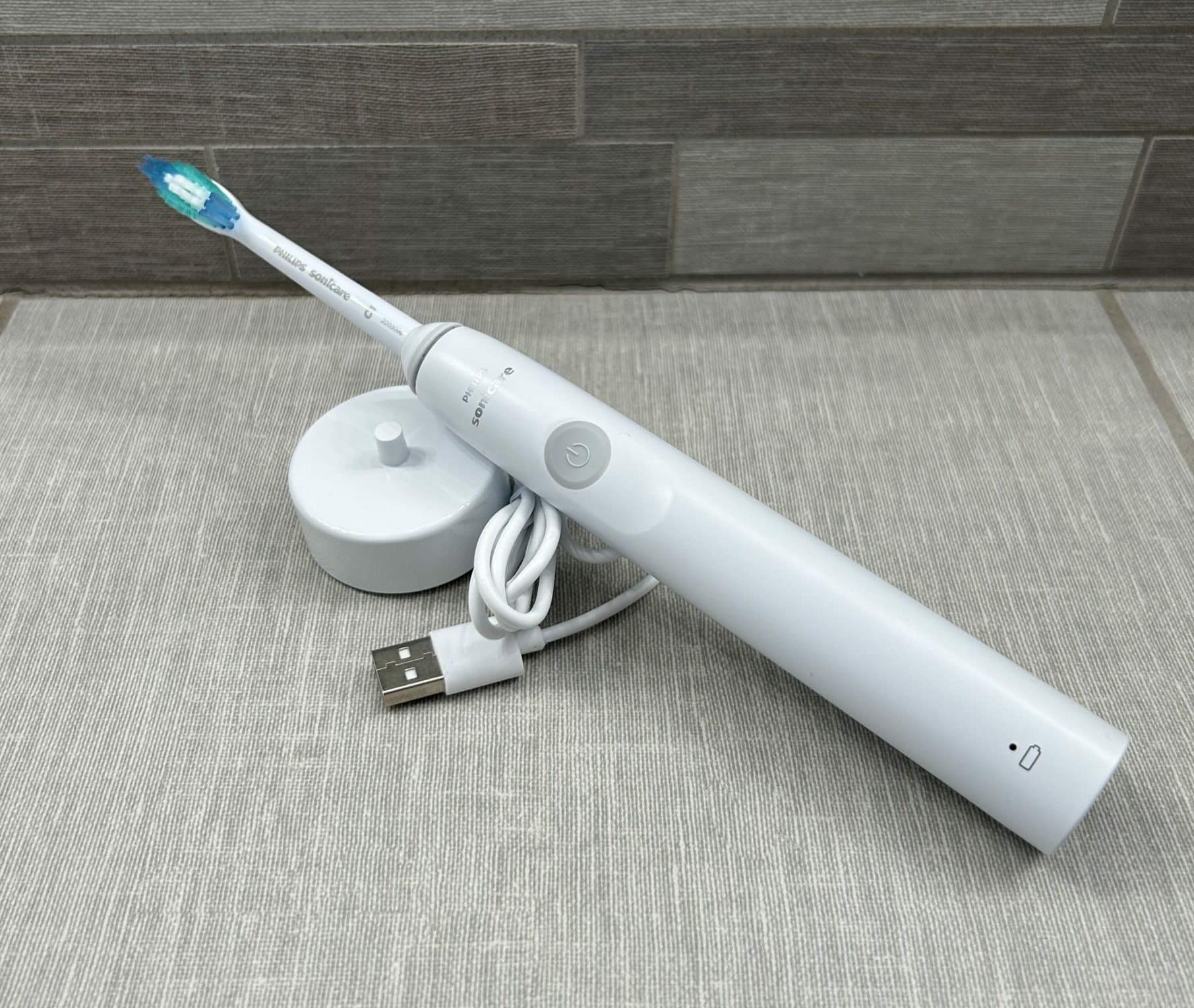
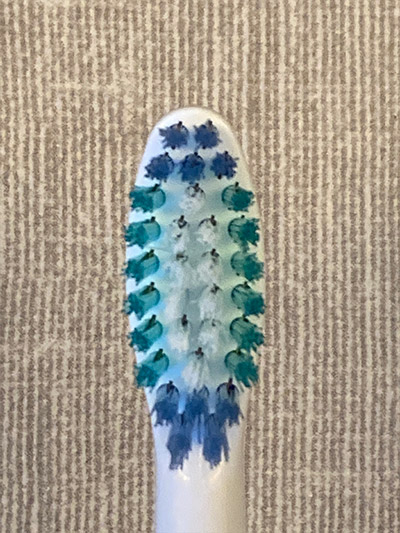
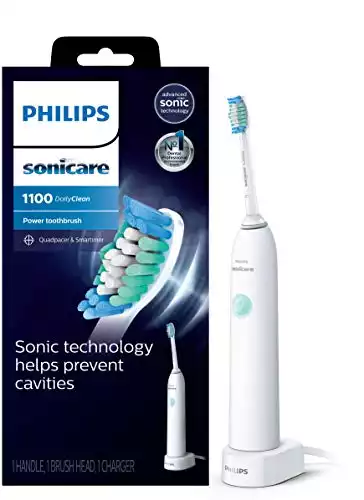
After two weeks of daily testing, the Philips Sonicare 1100 proved to be a straightforward, effective toothbrush that delivers a real Sonicare clean without the frills — or the frill pricing.
The Sonicare 1100 is the most affordable entry point into the Sonicare lineup, and it’s built for one job: getting manual brushers onto an electric brush.
It features one brushing mode (Clean), a single intensity, and a slim ergonomic handle that’s easy to hold and maneuver.
The sonic motor delivers up to 31,000 brush strokes per minute and removes up to 3x more plaque than a manual toothbrush. That’s the same clinical claim as the 2100 — the motors are identical.
The built-in 2-minute SmarTimer and 30-second QuadPacer are the features I care about most as a dentist. Almost nobody brushes a full two minutes without a timer, and most people neglect their back molars — which is exactly where I find the most decay.
EasyStart gradually ramps up the power over your first 14 brushings, which makes the switch from manual far less jarring.
Recommended Reading: Philips Sonicare DailyClean 1100 Electric Toothbrush Review 2026
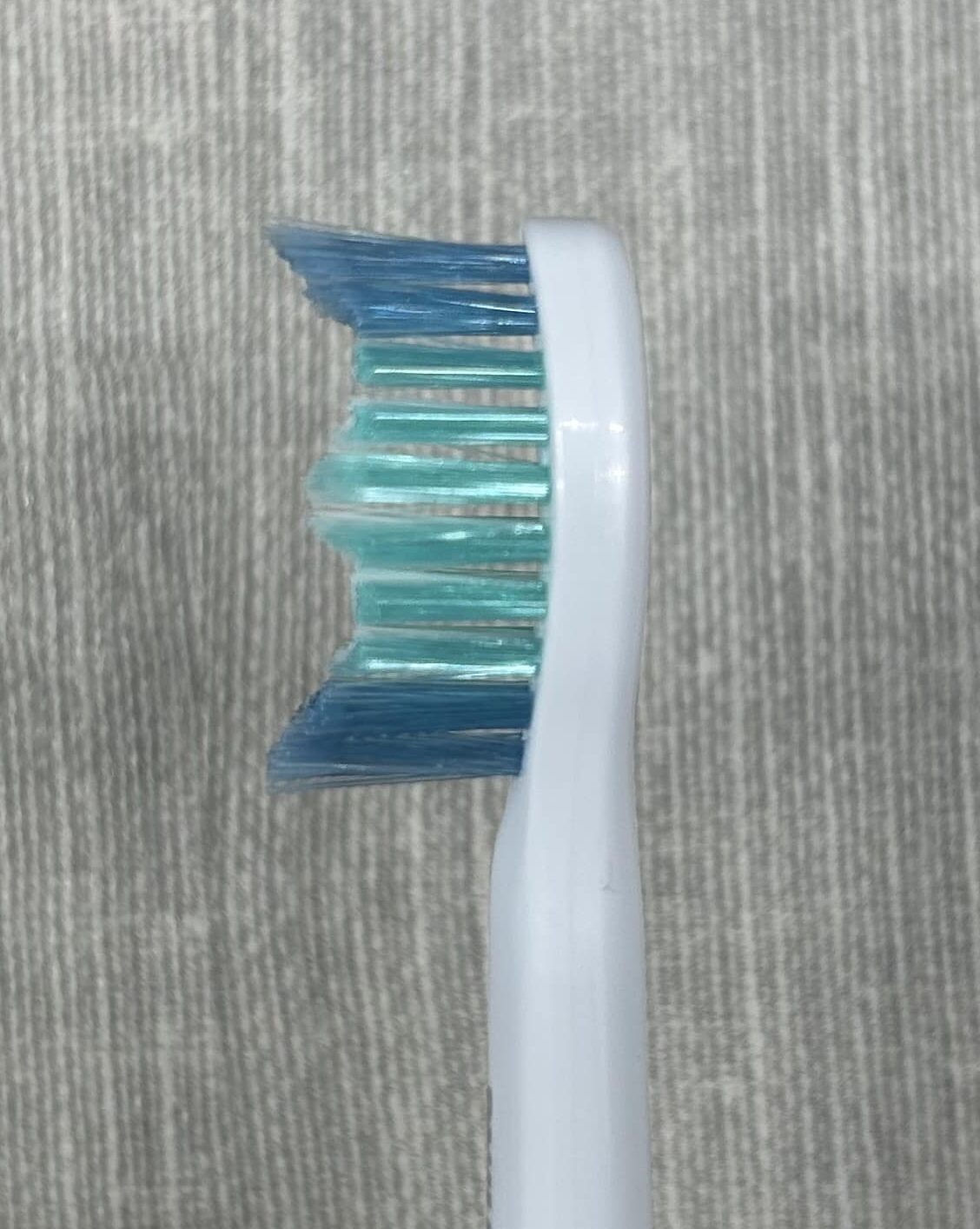
The toothbrush comes with Sonicare’s C1 brush head, which has a W-shaped design and feathered bristles that are gentle on teeth and gums. The brush head is replaceable and should be changed every three months.
My take: the 1100 is the right buy only when it’s meaningfully cheaper than the 2100. If you have sensitive teeth or gums, its single full-power intensity has no fallback.
Dentist Review | Sonicare 2100 Toothbrush
BUY -> Sonicare 2100 Toothbrush
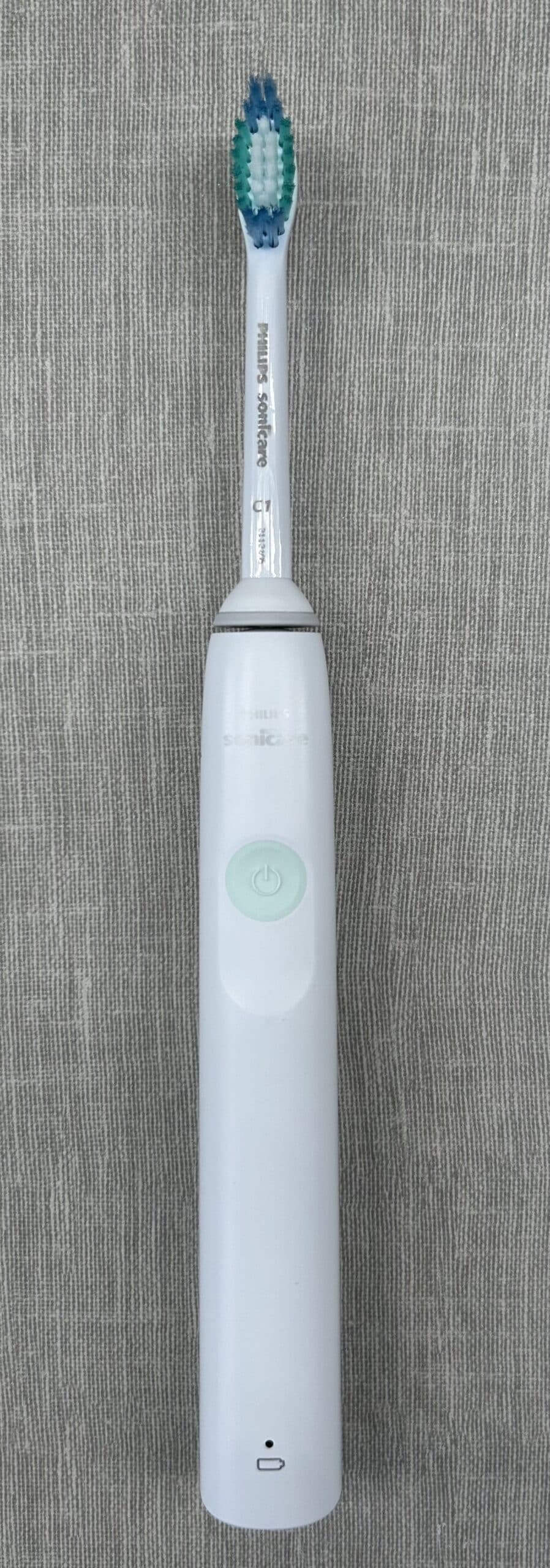
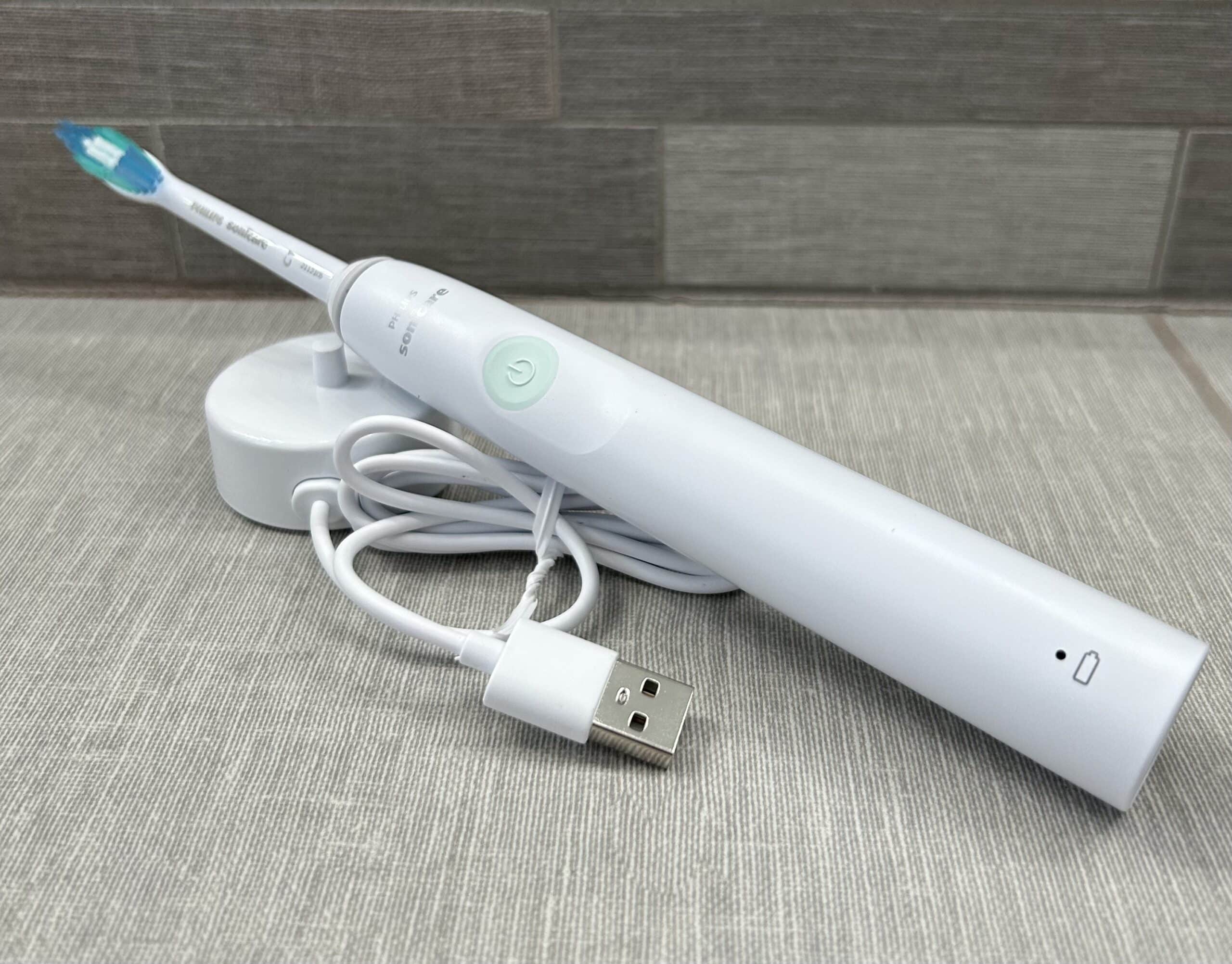
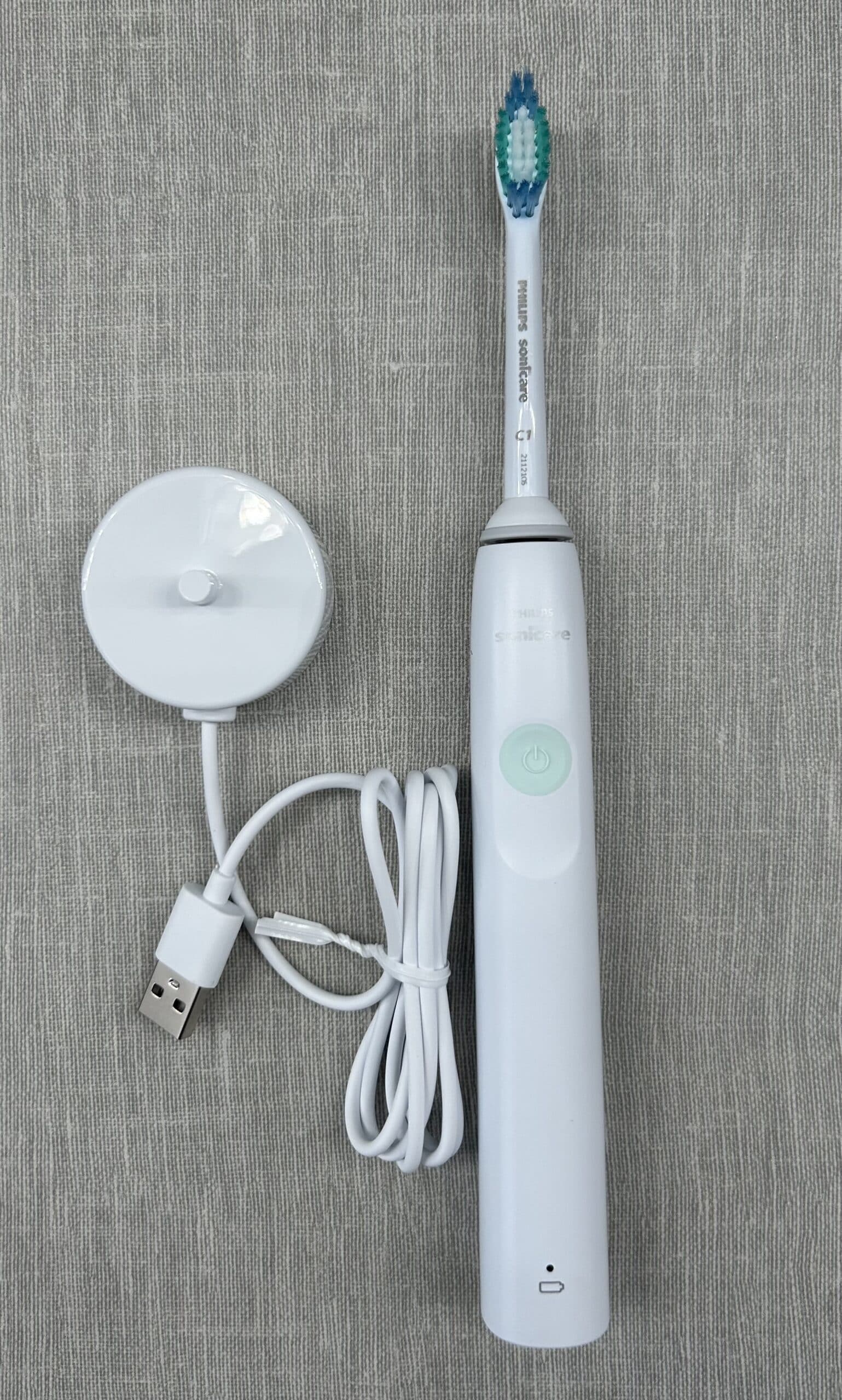
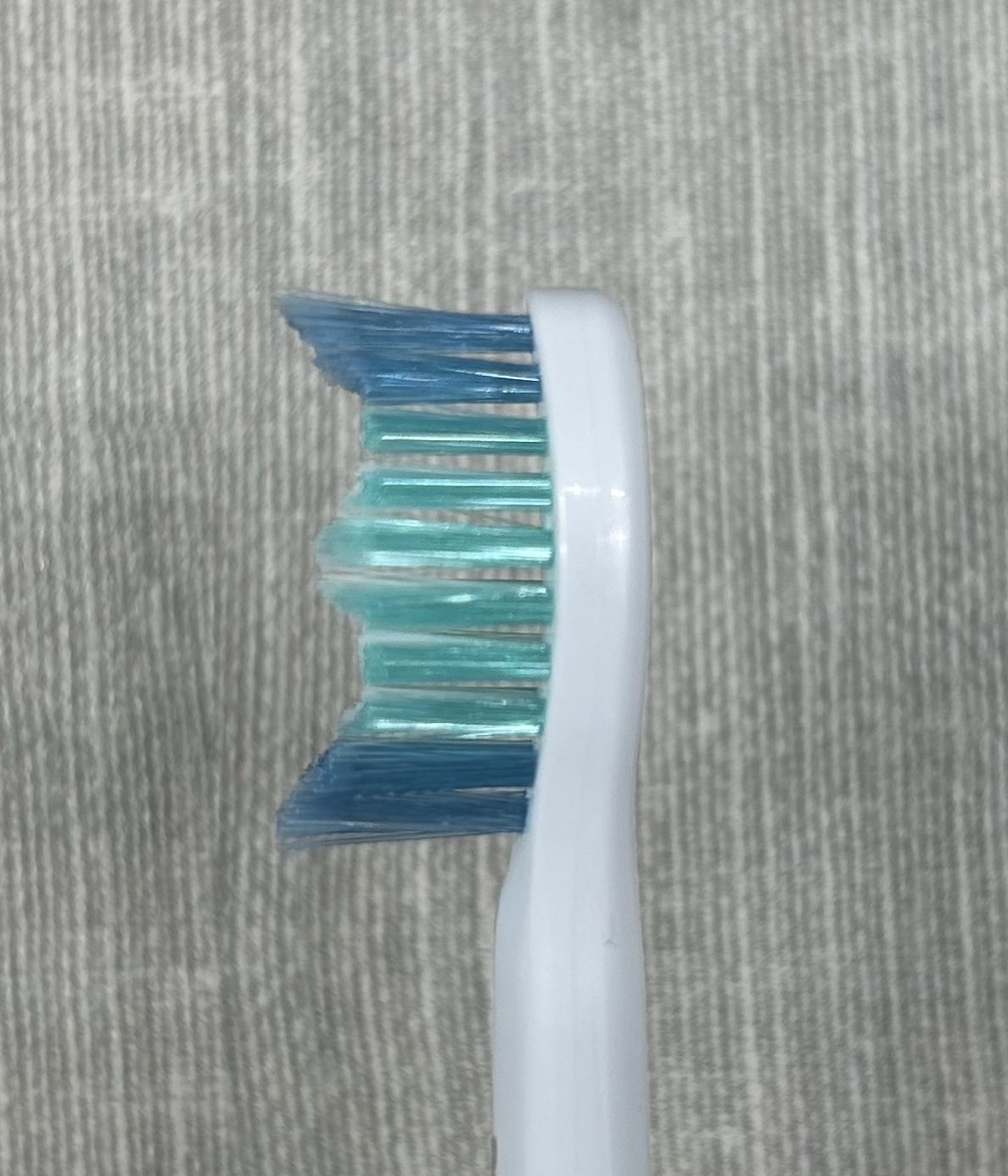
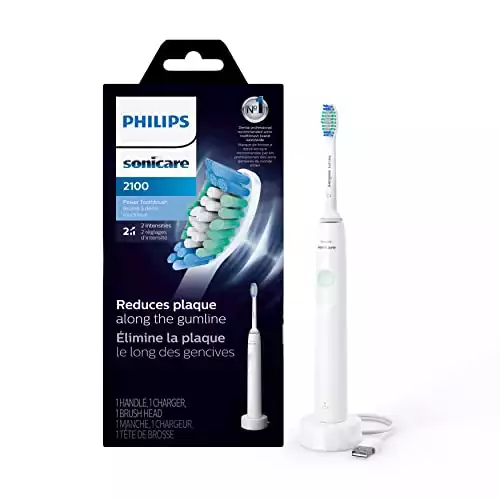
I tested the Sonicare 2100 for two weeks as well, and the feature that stood out was its two intensity settings — the one real difference between these brushes.
The Sonicare 2100 is the 1100 with a volume knob. Same Clean mode, same motor, same 3x plaque removal — but you can toggle between low and high intensity using the single power button.
That sounds minor. In my chair, it isn’t. Patients with gum recession, sensitivity, or recent periodontal treatment often abandon electric brushes because full power feels uncomfortable. The 2100’s low setting removes that excuse — and unlike EasyStart, which finishes after 14 uses, the low setting is there forever, any morning your gums feel tender.
The handle is slim and contemporary-looking, though I’d have appreciated grip texturing — the slickness made it harder to hold with wet hands.
The Philips Sonicare 2100 keeps things simple: one button turns it on, off, and toggles intensity. No app, no pressure sensor, no clutter.
Recommended Reading: Philips Sonicare DailyClean 2100 Electric Toothbrush Review 2026
The W-shaped brush head with variable-length feathered bristles cleaned well between teeth in my testing.
My two gripes: the slick handle, and the brush head’s hard plastic, which occasionally rattled against my teeth. Neither changed my verdict.
Similar Innovative Features
The Sonicare 1100 and 2100 share the same core platform — which is why this comparison comes down to a single feature.
Key Features
- Advanced Sonic Technology: 31,000 brush strokes per minute break up and sweep away plaque, removing up to 3x more than a manual toothbrush.
- SmarTimer and QuadPacer: A 2-minute timer with 30-second quadrant reminders — the two features that fix the brushing mistakes I see most as a dentist.
- EasyStart Technology: Gradually increases power over your first 14 sessions so the transition from manual brushing feels comfortable.
- Long Battery Life: Up to 14 days per charge — great for travel. Note: both ship with a USB cable but no wall adapter (any phone charger block works).
- C1 SimplyClean Brush Head: Same replaceable head on both models; swap it every 3 months.
Recommended Reading: Best Sonicare Replacement Brush Heads 2023 (Ultimate Guide)
Similar Effectiveness
I used each brush for two weeks, and on the high setting, I couldn’t tell them apart — because mechanically, there’s nothing to tell apart. Both removed plaque effectively, especially around the back molars where I see the most buildup in patients.
Both brush heads did an impressive job flicking food debris from between teeth — the sonic action pulses fluid into spaces the bristles never physically touch.
Either brush is a significant upgrade from a manual toothbrush for improving oral health. The question isn’t which one cleans better. It’s which one you’ll still be using a year from now.
Key Differences
Here’s the entire difference: the Sonicare 2100 has two intensity settings (low and high). The Sonicare 1100 has one.
Both have a single brushing mode. Both use the same motor, timer, battery, and brush head. Neither has a pressure sensor — that starts at the Sonicare 4100.
The prices are usually within a few dollars of each other, which makes my recommendation easy:
Buy the 2100. The low-intensity setting is a permanent comfort option for sensitive teeth, tender gums, and first-time electric brush users. Compliance is everything in dentistry — the best toothbrush is the one you actually use twice a day. For a few extra dollars, the 2100 makes that far more likely.
Buy the 1100 only if it’s on a significantly deeper sale, or you’ve used a Sonicare before and know full power suits you.
For comparison, the Aquasonic Black Series and Vibe Series run at 40,000 vibrations/min, the BURST Sonic at 33,000, and the 7am2m Sonic at 31,000.
Alternative Options
Brush too hard? Step up to the Sonicare 4100 — it adds a pressure sensor, which is the upgrade I recommend most often to patients with gum recession. There’s also a kids’ electric toothbrush, power flossers, and battery-powered options for travel.
Sonicare’s brush head range runs from sensitive to whitening, all compatible with both the 1100 and 2100.
If you want to track your brushing habits, Quip’s smart toothbrush connects to an app that monitors duration and frequency — useful for building the habit, though I’d take the Sonicare motor over Bluetooth features any day.
My Experience & Expertise
As a dentist, I recommend the Sonicare 2100 over the 1100 for most patients — and the reasoning fits in one sentence: a gentle brush you use every day beats a powerful one sitting in a drawer.
BUY -> Sonicare 2100 Toothbrush
Both brushes clean identically on high power. Both build correct habits with the timer and QuadPacer. But the 2100’s low-intensity setting protects sensitive gums, eases the manual-to-electric transition, and costs only a few dollars more on most days.
I recommend the 2100 to patients who are new to electric brushing, have sensitivity or recession, or simply want the option to dial things down. I recommend the 1100 to patients who find it on sale and know they tolerate full-power sonic brushing.
Whichever you choose, replace the brush head every three months and let the brush do the work — no scrubbing.
Electric Toothbrush Overall Rankings
- Philips Sonicare 9900 | 10/10
- Philips Sonicare 9500 | 9.9/10
- Philips Sonicare 9750 | 9.9/10
- Philips Sonicare 9300 | 9.8/10
- BURST Pro Sonic | 9.7/10
- Philips Sonicare 9000 | 9.7/10
- Philips Sonicare 7500 | 9.6/10
- BURST Original Sonic | 9.5/10
- Philips Sonicare 6100 | 9.5/10
- Philips Sonicare 6500 | 9.5/10
- BURST Curve Sonic | 9.4/10 $
- 7am2m Electric | 9.4/10
- Philips Sonicare 5300 | 9.4/10
- AquaSonic Black | 9.3/10
- AquaSonic Vibe | 9.3/10
- Philips Sonicare 5100 | 9.3/10
- SNOW LED Electric | 9.2/10
- Brio (Ollie) SmartClean | 9.1/10
- Philips Sonicare 2100 | 9.1/10
- Bitvae Smart S3 | 9.1/10
- Philips Sonicare 1100 | 9.1/10
- Philips Sonicare 4100 | 9.0/10
- Bitvae S2 Ultrasonic | 8.9/10
- Bitvae D2 Electric | 8.8/10
- Oral-B 1500 Electric | 8.8/10
- Oral-B Pro 1000 | 8.7/10
- Bitvae R2 Rotating | 8.5/10
- Quip Electric | 8.5/10
- Colgate Hum Electric | 7.5/10
Need a second opinion? We can help! Learn more. Knowledge is power when cultivating healthy dental habits. The more informed you are, the better positioned you’ll be to prevent avoidable and potentially costly dental procedures for you and your family. Watch for future blog posts, where we’ll continue sharing important information, product reviews and practical advice!