Cavities | Ultimate Guide (Content Hub)

According to a study in Journal of Dental Research, nearly 4 billion people worldwide suffer from untreated cavities that prevent them from eating and sleeping.
Cavities affect 35% of the world’s population and are the most common health condition according to Global Burden of Disease 2019.
Lack of preventative resources, access to care, and education contribute to this growing oral health concern.
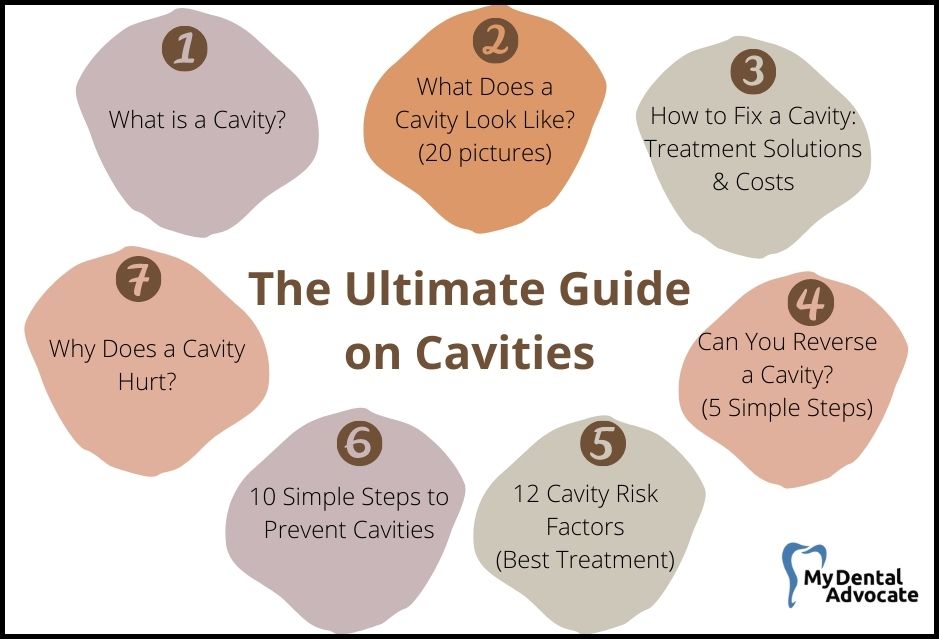
This article is the content hub for cavities and is divided into seven sections. Each section links to original blog post containing more details and information.
Related: Learn more about Cavities
What Is a Cavity? What Causes Rotten Teeth?
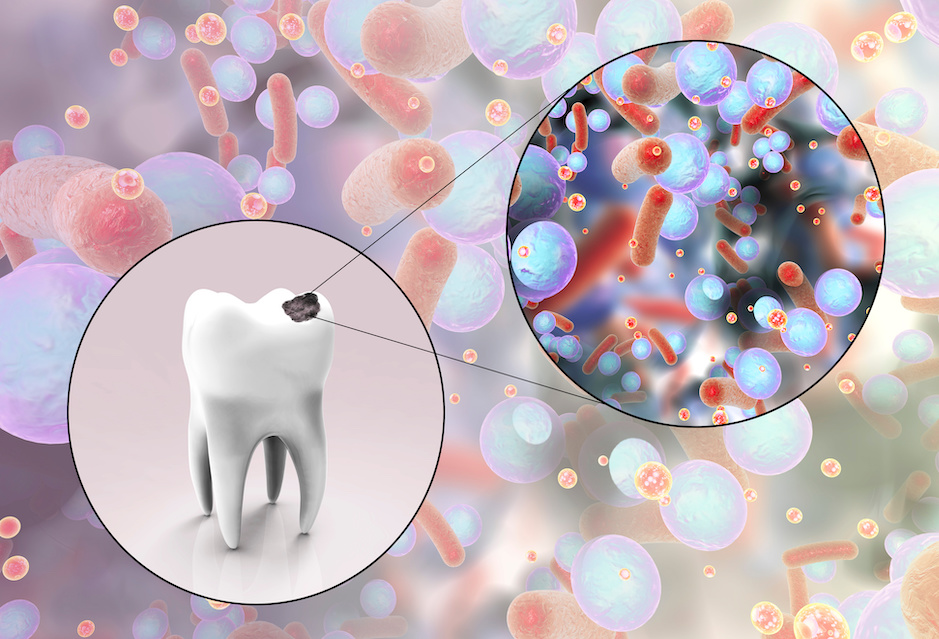
In a nutshell, rotten teeth occur when bacteria consume sugars, leading to acid production and tooth destruction.
Multiple factors contribute to this process, including three significant factors; host (person), flora (bacteria), and carbohydrates (sugars). In addition, other factors contribute to the cavity formation process, including saliva flow, time, and genetics.
If you’re interested in learning more about the cavity process from beginning to end, check out the link below.
What Does a Cavity Look Like? (20 Pictures)
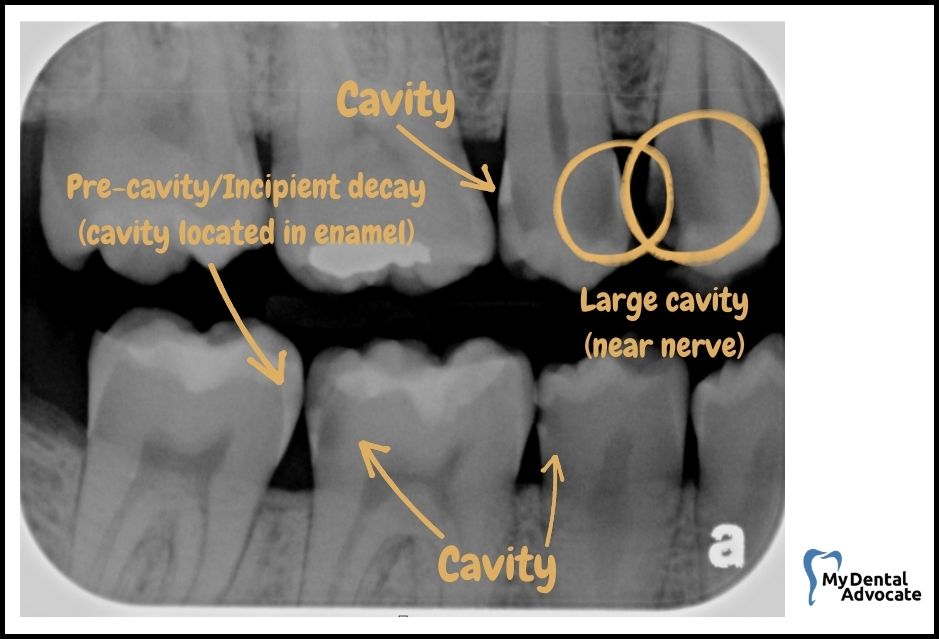
Are you concerned you have a cavity? Do you know what a cavity looks like? Cavities come in all shapes, sizes, and colors. Some cavities are easily visualized when you open up, while others form in hard-to-reach areas.
X-rays are regularly taken when you visit the dentist to screen for tooth decay between your teeth. Do you know the most common signs and symptoms of a cavity?
If you are interested in learning more about these topics and want to view a gallery of cavity pictures, check out the link below.
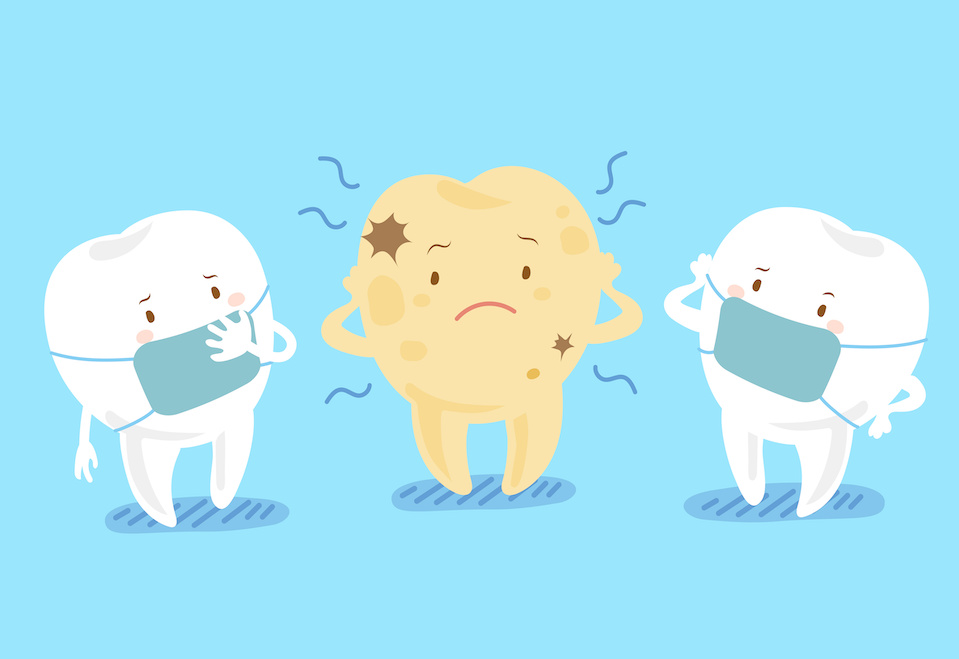
How to Fix a Cavity: Treatment Solutions & Costs (2026)
So your dentist informed you that you have a cavity, now what? Is your head spinning as they rattle off different treatment options? Determining how to fix a cavity requires contemplating treatment options, including a filling, inlay, onlay, or crown?
Is your cavity waking you up at night and causing spontaneous pain? If so, you may need a root canal. We all know dentistry isn’t free, so you will have to pay up; just how much is the question. Treatment costs are variable and change depending on many factors.
If you are interested in learning more about the treatment options and fees, check out the link below.
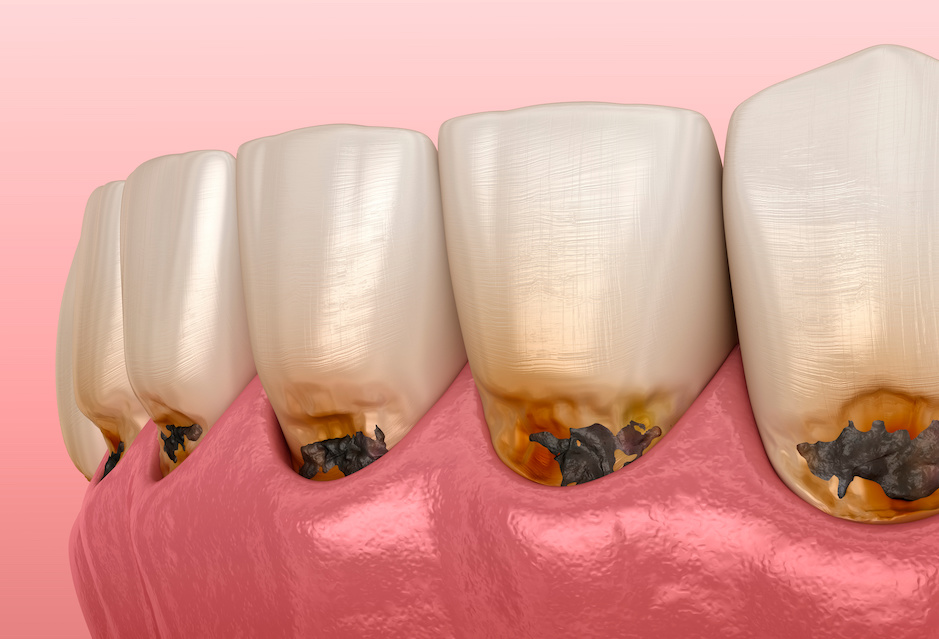
Can You Reverse a Cavity? (5 Simple Steps)
When you think of a cavity, most immediately think about how much it hurts and how much it costs. Fortunately, there are ways to reverse or heal a cavity before it progresses to an irreversible stage.
You may be wondering how this is possible? Cavities occur when bacteria form acid, which degrades the tooth surface.
When the cavity begins this process, it attacks the enamel first. During this stage, the enamel surface breaks down.
However, there’s no hole in the tooth, yet. If a cavity is discovered during this stage, fluoride application treatments can be administered to reverse the cavity process.
If you are interested in learning more about this “remineralization” process and five simple action steps, check out the link below.
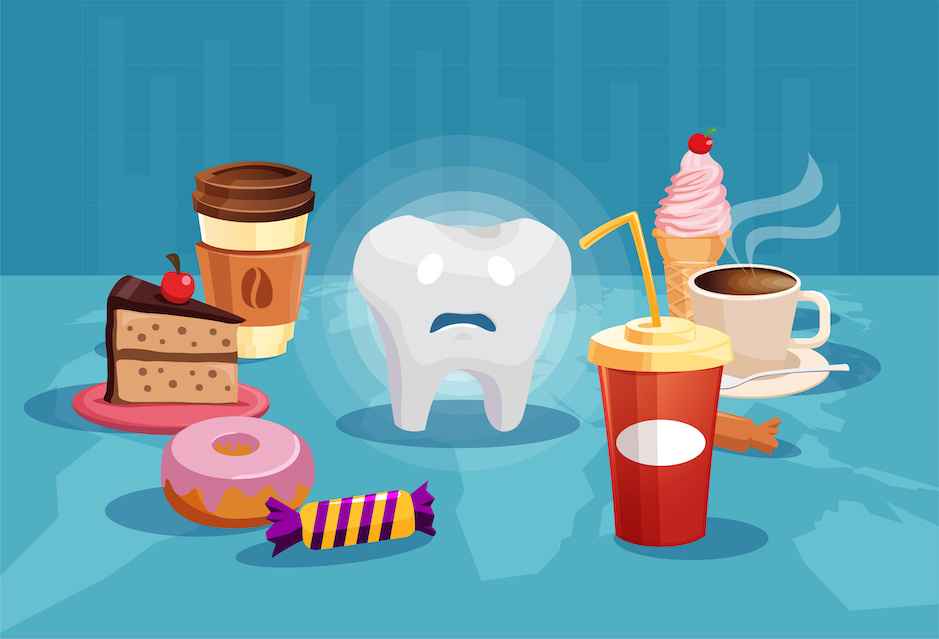
12 Cavity Risk Factors (Best Treatment)
Did you know that some people are more prone to develop cavities than others?
All teeth are created equal however some individuals possess risk factors that lead to cavities such as dry mouth, low salivary flow, high-frequency carbohydrate intake, etc.
Understanding these risk factors can help you guard against future cavities. Also, we highlight the available treatment to reverse tooth decay.
If you are interested in learning more about cavity risk factors, check out the link below.

10 Simple Steps to Prevent Cavities (Dentist’s Perspective)
Most cavity risk factors are out of our control because of genetics or anatomical issues; however, you can modify some risk factors to help prevent cavities.
For example, did you know it’s not about how much sugar you eat; it’s about how often you consume sugar that leads to tooth decay.
The more frequently sugar bathes the teeth, the more opportunity the bacteria have to use this as their food source and produce cavity-causing acid.
In addition, you can take many other simple steps to prevent cavities, and if this interests you, check out the link below.

Why Does a Cavity Hurt? (5 Toothache Home Remedies)
Cavities can be a real pain. Each tooth has a delicate nerve in the center that relays helpful information to your brain, such as temperature, pressure, and irritation.
Tooth decay occurs when bacteria attack your body (tooth).
This irritation elicits a reactionary response, warning your brain that danger is present. Without a pain response, we would cause irreversible harm to our teeth or body.
The article below that highlights five toothache home remedies that will hold you over until you see your dentist.
My Experience & Expertise
This guide highlights appropriate cavity treatment, remedies, and information.
We answer common related questions, so you are fully informed the next time you visit the dentist. Circle back to this content hub, home base. Good luck!
Need a second opinion? We can help! Learn more. Knowledge is power when cultivating healthy dental habits. The more informed you are, the better positioned you’ll be to prevent avoidable and potentially costly dental procedures for you and your family. Watch for future blog posts, where we’ll continue sharing important information, product reviews and practical advice!