Are Panoramic Dental X-rays Necessary?

Panoramic dental X-rays provide a comprehensive view of the mouth, capturing teeth, jawbones, and more.
While not essential for everyone, they help diagnose unseen dental issues, like impacted teeth, cysts, and tumors.
They also aid in planning treatments like orthodontics and dental implants. However, some have concerns about radiation exposure.
Key Takeaways
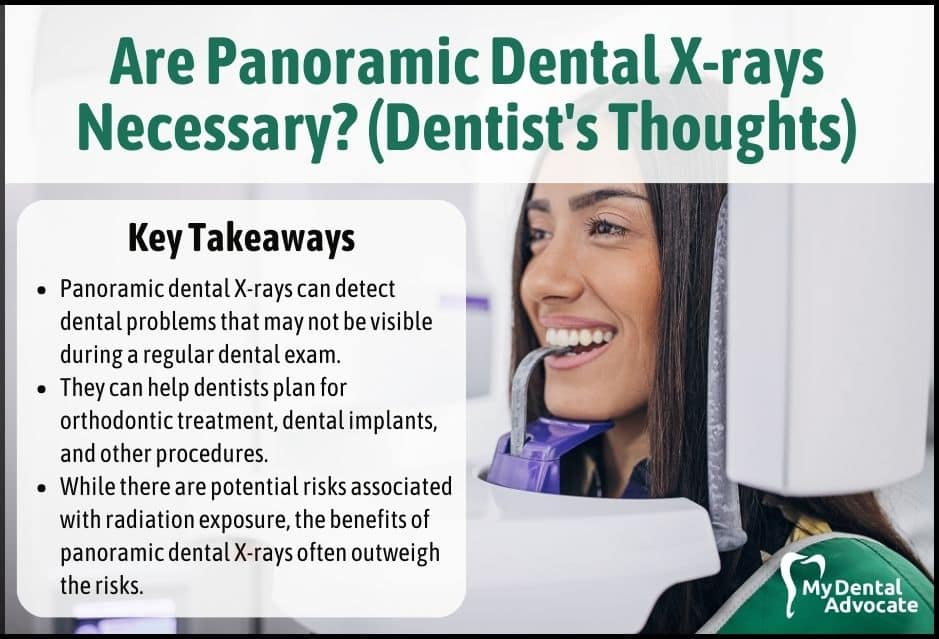
- Panoramic dental X-rays can detect dental problems that may not be visible during a regular dental exam.
- They can help dentists plan for orthodontic treatment, dental implants, and other procedures.
- While there are potential risks associated with radiation exposure, the benefits of panoramic dental X-rays often outweigh the risks.
Recommended Reading: Dental X-rays | The Ultimate Guide
What Are Panoramic Dental X-rays?
Panoramic dental X-rays, or panoramic radiographs, are a type of dental imaging that captures a wide view of the entire mouth.
Unlike traditional dental X-rays focusing on a specific area of the mouth, panoramic X-rays show the teeth, jaws, and surrounding structures in a single image.
Panoramic X-rays are commonly used in dentistry to diagnose and monitor various dental conditions, including tooth decay, gum disease, and impacted teeth.
Recommended Reading: Can I Refuse Dental X-rays? (Dentist’s Thoughts)
They can also be used to evaluate the jawbone and surrounding structures for orthodontic treatment and dental implant placement.
How Are They Performed?
Panoramic X-rays are typically performed in a dental office or clinic using a specialized machine.
During the procedure, you will be asked to stand or sit in front of the machine with your chin resting on a small platform.
The machine will rotate around your head, taking several X-ray images in a matter of seconds.
To ensure accurate results, following your dentist’s instructions before the procedure is important. This may include removing jewelry, glasses, or other objects interfering with the imaging process. You may also be asked to wear a lead apron to protect your body from radiation exposure.
It is recommended that panoramic radiographs be obtained every 18 to 36 months in patients who visit dental clinics for regular checkups.
Diagnosis and Treatment Planning
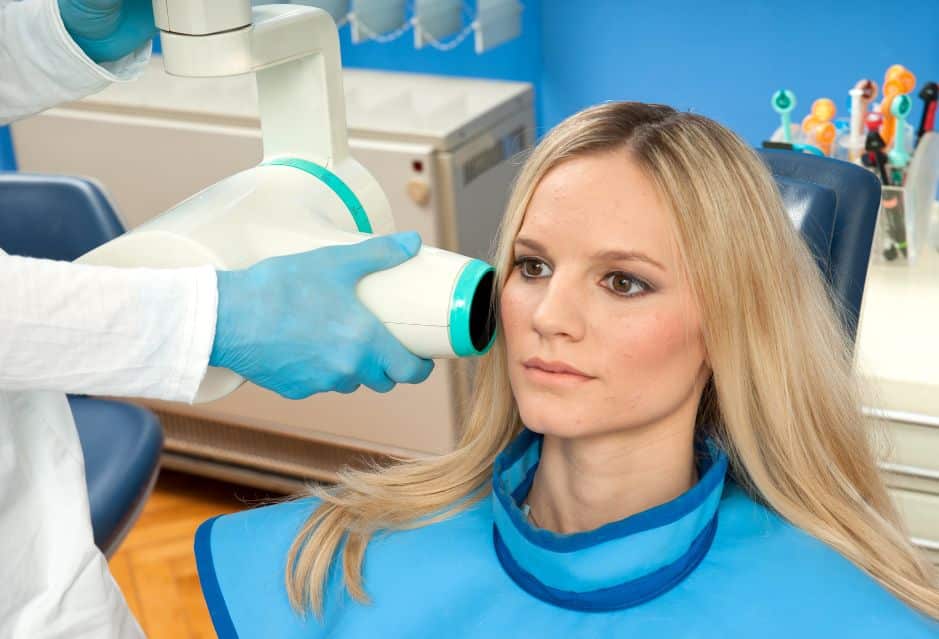
Panoramic dental x-rays provide a comprehensive view of your teeth, jawbone, and surrounding structures.
This allows your dentist to identify any abnormalities or issues requiring further investigation or treatment.
These X-rays can help your dentist diagnose conditions such as impacted teeth, cysts, tumors, and jawbone fractures.
With this information, your dentist can develop a treatment plan tailored to your specific needs.
Recommended Reading: Expert Pediatric Dental X-ray Guidelines (Complete Guide)
Detection of Dental Problems
Panoramic dental x-rays can also help your dentist detect dental problems before they become more serious.
For example, these X-rays can reveal the early stages of tooth decay, gum disease, and other oral health issues that may not be visible during a visual examination.
By detecting these problems early, your dentist can recommend preventive measures to help you avoid more complex and costly dental treatments.
Recommended Reading: How Often Should You Get Dental X-rays (Expert Advice)
Benefits of Panoramic Dental X-rays
Panoramic dental X-rays are an essential diagnostic tool for dentists.
They provide a comprehensive view of the entire mouth, including the teeth, jawbone, and surrounding tissues. Here are some benefits of panoramic dental X-rays:
Common Benefits
- Detecting Dental Problems: Panoramic X-rays reveal issues like impacted teeth, cysts, and tumors, not always visible in regular exams.
- Planning Dental Treatments: Useful for planning orthodontics, implants, and root canals.
- Reduced Radiation Exposure: Safer for patients, as they emit less radiation than traditional X-rays.
- Time Efficiency: Quicker than traditional X-rays, minimizing patient time in the dental chair.
Overall, panoramic dental X-rays are a valuable diagnostic tool that can help dentists detect dental problems, plan treatment, reduce radiation exposure, and save time.
Risks & Limitations of Panoramic Dental X-rays

Panoramic dental X-rays are generally safe, but they come with risks and limitations. Here are some things you should know:
Radiation Exposure
Panoramic dental X-rays use low radiation levels, but knowing the potential risks is still important.
Recommended Reading: Are Dental X-rays Necessary? (Expert Advice)
Exposure to high radiation levels can increase your risk of cancer, so it’s important to limit your exposure as much as possible.
The good news is that the amount of radiation you’re exposed to during a panoramic dental X-ray is relatively low. In fact, it’s about the same as the amount of radiation you’re exposed to during a short airplane flight.
Limitations in Detail
While panoramic dental X-rays can be useful for detecting specific dental issues, they do have some limitations. For example, they may be unable to detect small cavities or other dental problems hidden behind the teeth.
Panoramic dental X-rays also have limited resolution, which means they may be unable to provide detailed images of certain areas of the mouth. This can make it difficult for your dentist to detect some dental issues.
Recommended Reading: FMX Dental X-Ray Guide (Are They Safe?)
My Experience & Expertise
As a dentist, panoramic dental X-rays offer a comprehensive view of oral health, not always achievable with standard exams.
While not always necessary, if suggested, discuss its purpose with your dentist.
Deciding to undergo such an X-ray should be an informed choice made with your dental professional’s guidance. Open dialogue ensures optimal care for your oral health.
Need a second opinion? We can help! Learn more. Knowledge is power when cultivating healthy dental habits. The more informed you are, the better positioned you’ll be to prevent avoidable and potentially costly dental procedures for you and your family. Watch for future blog posts, where we’ll continue sharing important information, product reviews and practical advice!